Sunday, June 28, 2026
St Luke Ukrainian Greek Catholic Church

Cody

With all humility and gentleness, with patience, bearing with one another in love, eager to maintain the unity of the Spirit in the bond of peace… Ephesians 4:2-3

About

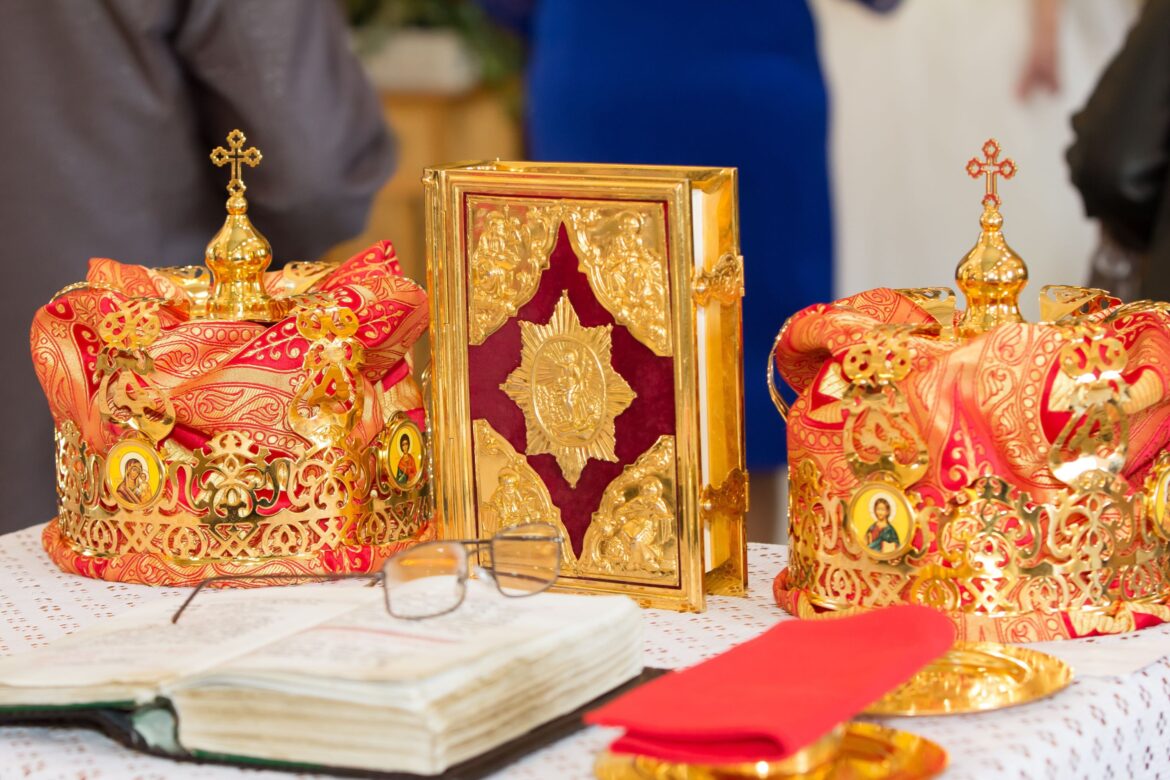
The Holy Mystery of Marriage based on the Code of Canon Law (Canon 1055), “The matrimonial covenant, by which a man and a woman establish between themselves a partnership of the whole of life, is by its nature ordered toward the good of the spouses and the procreation and education of offspring.”

471 God created human beings male and female: “By you, O God, a woman is joined to man as a helpmate and for the continuance of the human race … you blessed them, saying: ‘increase and multiply and rule the earth.’ Through wedlock you made the two of them one body.” In the Church, the marriage union is a Holy Mystery in which the man and woman manifest the new life in Christ. A Christian marriage is not only a natural relationship, a shared life and experience; it is an occasion of sanctification. Marriage is a Holy Mystery (Sacrament) in which by the grace of the Holy Spirit a man and a woman are united into one body and create a domestic church. The family union created by marriage is a community of persons which, according to God’s plan, is an icon of the relationship of the Persons of the Most Holy Trinity.

Scheduling Wedding

Congratulations on your engagement! May God’s Grace continue to guide you both in this new journey. Marriage is the way God will make you a saint!
You must contact a parish priest at least six months before the possible wedding date due to the preparation required for sacramental marriages.
Contact through our email.

Marriage Preparation

St. Luke requires six months of marriage preparation.
Most couples will be asked to focus on preparation for the premarital life. The goal is to help engaged couples learn more about themselves and their relationship.
St. Luke requires couples to attend our Pre-Cana classes.
The preparing priest can assist you in preparing the liturgy, readings, music, and other elements for your wedding.
30
0 FacebookTwitterPinterestWhatsappTelegramSkypeViberEmail

Receive the Holy Spirit. For those whose sins you forgive, they are forgiven; for those whose sins you retain, they are retained (John 20:22-23)


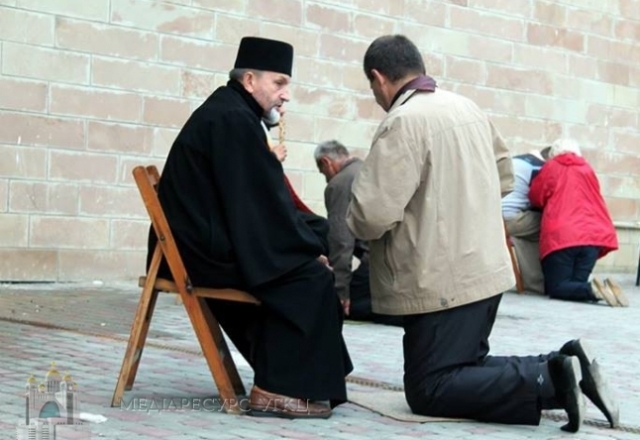
449 The Holy Mystery of Repentance (or Confession) is a marvellous manifestation of God’s love and mercy towards us sinners. This is because the Lord does not reject us and does not turn away from us when we, having been washed of our sins in Baptism and endowed with divine grace, sin again through malice or weakness. Indeed, the Lord awaits our repentance. He forgives us if we repent and confess our sins (see Lk 15:12-32).


450 In the celebration of the Holy Mystery of Repentance, the Church actualizes the words of the Lord to the apostles: “Receive the Holy Spirit. If you forgive the sins of any, they are forgiven them; if you retain the sins of any, they are retained” ( Jn 20:22-23). Every priest continues the apostolic ministry in the Mystery of Repentance when he absolves the faithful of their sins and reconciles them with the Church. The priest pronounces the prayer of absolution (the loosing from the bondage of sin) and every penitent thereby receives Christ’s forgiveness.

How Often Should You Go to Confession?

The church urges the faithful to take advantage of the Holy Mystery often. A good rule of thumb is to go once per month. (The Church strongly recommends that, in preparation for fulfilling our Easter Duty to receive Communion, we go to Confession even if we are aware of venial sin only.)
The Church especially urges the faithful to receive the Mystery of Confession frequently during Lent, to help them in their spiritual preparation for Easter.

455 Frequent Confession allows us to know not only our faults and offenses, but also our weaknesses and inclinations to sin. Through the grace of the Mystery of Repentance, the Christian overcomes sins and the tendency to sin. This grace also raises up the Christian after a fall, and strengthens him or her in the virtues. The fruits of repentance are good works,
almsgiving, purity of heart, and sacrificial love. The gift of the Mystery of Repentance is forgiveness from God and reconciliation with him:

“[Give] thanks to the Father, who has enabled you to share in the inheritance of the saints in the light. He has rescued us from the power of darkness and transferred us into the kingdom of his beloved Son, in whom we have redemption, the forgiveness of sins” (Col 1:12-14).


461 Frequent Confession makes a person spiritually sound, capable of resisting temptation; and it increases their vigour in the spiritual struggle. Appropriate occasions for Confession are the [four] fasts of the liturgical year, during which, according to Church custom, the whole family approaches the Holy Mystery of Confession.

What Is Required?

457 Preparation for Confession requires a prayerful examination of one’s conscience. This consists of aligning our life with the divine commandments, the Church’s precepts, and the Gospel Beatitudes. Metropolitan Andrey Sheptytsky teaches:

A good Confession requires, perhaps, a lengthier preparation.
Before holy Confession we should beseech God in prayer for the gift of repentance, the gift of heartfelt tears. Maybe there is even a need to fast, since you know what Jesus Christ said: “This kind can come out only through prayer and fasting” [see Mk 9:29]. There are sins that cannot be expelled from the soul without fasting, without prayer.

An important condition of Confession is sincere repentance, the desire to change one’s life. This means having contrition, or sorrow for sins, and a resolution to make amends. Sincere repentance is first of all realizing that one is a sinner in need of God’s forgiveness, and seeing that one’s sins have caused a turning away from God and rejection of his love. An important requisite of Confession is also reconciliation with one’s neighbor: “When you are offering your gift at the altar, if you remember that your brother or sister has something against you, leave your gift there before the altar and go; first be reconciled to your brother or sister, and then come and offer your gift” (Mt 5:23-24).

The Significance of Confession in the Spiritual Life

460 In the Holy Mystery of Repentance, God grants the Christian growth in the grace of Baptism and the virtues. The closer we come to God, we see our own weaknesses and sinfulness more clearly and thus feel the need for more frequent Confession. According to the spiritual Fathers, if a person confesses rarely, he or she gradually loses the capacity to distinguish between good and evil, which has negative consequences for his or her whole life.

Schedule
Before every Divine Liturgy or by appointment.

Confession Guide

62
0 FacebookTwitterPinterestWhatsappTelegramSkypeViberEmail

During his earthly ministry, our Lord Jesus Christ healed those who came to him of every illness and disease, as a sign of the appearance of the Kingdom of God, and out of his great love. He sent his apostles to do the same, and the Apostle James wrote, “Is any among you sick? He should summon the presbyters of the church, and they should pray over him and anoint him with oil in the name of the Lord; and the prayer of faith will save the sick person, and the Lord will raise him up. If he has committed any sins, he will be forgiven” (James 5:13-15).

Oil, the Symbol of Healing

In Judaism and early Christianity, oil (generally olive oil) was a potent symbol. It could soothe wounds, cleanse, and soften; athletes poured oil upon their body before competing, and the anointing of a man as priest or king often made use of oil as well.

Christ himself was called the Messiah, or “anointed one of God”, and the descent of the Holy Spirit was seen as a further anointing. Thus, the Church, following the instructions of Saint James, anoints the sick for healing and forgiveness, in the Mystery of Holy Oil (also called Unction, or Anointing of the Sick, all of which have the same basic meaning).

The Holy Oil is also used in this Mystery as a sign of God’s presence, strength, and forgiveness. After the reading of three epistle lessons, three gospel lessons and the offering of three prayers, which are all devoted to healing, the priest anoints the body with the Holy Oil.

Scheduling a Visit

If you or someone you know is gravely ill, about to undergo a serious operation, or is in danger of death, the Mystery of Anointing is a powerful and grace-filled way for Jesus to come to your assistance. Contact us and we will schedule a visit with you or your loved one.

9
0 FacebookTwitterPinterestWhatsappTelegramSkypeViberEmail

The Mystery of the Eucharist (Holy Communion) is the third of the Mysteries of Christian initiation. In the Eucharist the newly baptized, who was born in Christ and filled with the Holy Spirit, receives the communion of the Body and Blood of Christ at the holy Eucharistic table. But unlike Baptism and Chrismation, which we receive only once, we receive the Mystery of the Eucharist throughout our lives, since it is through this Mystery that we grow in the grace received in Baptism and Chrismation—the grace to be sons and daughters of God.

For this reason our Church offers Communion to the newly baptized.

432 In the Mystery of Holy Communion, Christ gives us his very self, his Body and Blood, as nourishment for our growth in the new life. At the Mystical Supper (Last Supper) Christ offered himself for us so that we might be able to offer our lives for our neighbour, as he offered his life (see Jn 13:34). Receiving Communion in the Lord’s Body and Blood, we receive a pledge of life eternal: “Those who eat my flesh and drink my blood have eternal life, and I will raise them up on the last day” (Jn 6:54). Partaking of the Body and Blood of Christ, we already have eternal life, the fullness of which will be revealed in the glorious second coming of Christ. “For since he bestowed on us his own image and his own spirit and we did not guard them, he took himself a share in our poor and weak nature, in order that he might cleanse us and make us incorruptible, and establish us once more as partakers of his divinity.”

The Holy Eucharist most fully manifests and creates our communion both with God and with others. All who have communion with Christ become “one body in Christ, and individually we are members one of another” (Rom 12:5). In other words, we become one Church. “Because there is one [Eucharistic] bread, we who are many are one body [of Christ], for we all partake of the one bread” (1 Cor 10:17). We profess this same truth in the Anaphora of Saint Basil the Great when we ask God to “unite all of us who share in this one bread and cup with one another into the communion of the one Holy Spirit.” Saint John of Damascus teaches:

Participation is spoken of; for through it we partake of the divinity of Jesus. Communion, too, is spoken of, and it is an actual communion, because through it we have communion with Christ and share in his flesh and his divinity: [at same time] we have communion and are united with one another through it. For since we partake of one bread, we all become one body of Christ and one blood, and members one of another, being of one body with Christ.

42
0 FacebookTwitterPinterestWhatsappTelegramSkypeViberEmail

You shall receive power when the Holy Spirit comes upon you, and you shall be witnesses for Me…. even to the very ends of the earth.

– Acts 1:8

About a Sacrament

The Sacrament of Chrismation (Confirmation) immediately follows Baptism and is never delayed until a later age. As the ministry of Christ was enlivened by the Spirit and the preaching of the Apostles strengthened by the Spirit, so is the life of each Orthodox Christian sanctified by the Holy Spirit. Chrismation, which is often referred to as one’s personal Pentecost, is the Sacrament which imparts the Spirit in a special way.


428 Holy Chrism, a fragrant mixture of oils and other aromatic components, symbolizes the richness and diversity of the spiritual gifts which the Holy Spirit grants to the newborn in Christ.

Beware of supposing that this oil [i.e., Chrism] is mere ointment.

Just as after the invocation of the Holy Spirit the Eucharistic bread is no longer ordinary bread but the Body of Christ, so this holy oil, in conjunction with the invocation, is no longer simple or common oil but becomes the gracious gift of Christ and the Holy Spirit, producing the advent of his divinity.

Holy Chrism is consecrated on Holy Thursday by the head of a self-governing Church for use by priests, which evidences the unity of the Church.

The Rite of Confirmation

429 During the Rite of Chrismation, the priest anoints the newly baptized on the forehead, eyes, nostrils, lips, ears, breast, hands, and feet. He proclaims: “The seal of the gift of the Holy Spirit.” Thus, “in every word and deed” the newly baptized is to please God and become “a son (daughter) and heir” of his kingdom. The Holy Spirit transfigures the thoughts, feelings, and deeds of those who are members of the kingdom.


430 The words “The seal of the gift of the Holy Spirit” witness to the fact that the Christian belongs to God. Christians are his possession because we “were marked with the seal of the promised Holy Spirit; this is the pledge of our inheritance toward redemption as God’s own people, to the praise of his glory” (Eph 1:13-14). It is through the power and the action of the Holy Spirit that the Christian lives in Christ: “The anointing that you received from him abides in you, and so you do not need anyone to teach you. But as his anointing teaches you about all things, and is true and is not a lie, and just as it has taught you, abide in him” (1 Jn 2:27).

How to Get Confirmed

For more information about scheduling and making arrangements for an older child to prepare to receive this Holy Mystery please contact us.
If you are an adult and haven’t been confirmed, please don’t delay. Mystery of Confirmation brings great graces that will help you in your struggle to attain holiness.

22
0 FacebookTwitterPinterestWhatsappTelegramSkypeViberEmail

The Father reveals and grants us eternal life through his Son in the Holy Spirit. This life of the new creation becomes accessible to us not only after death, but even now. Through the Holy Mysteries of Baptism and Chrismation, along with the Eucharist, we are united to Christ. In him we become heirs of divine life, bearers of the Holy Spirit, who reveals to us the full truth of Christ. The Spirit leads us along the paths of Christ’s commandments and prays within us: “Abba! Father!” (Rom 8:15). Through these Holy Mysteries we become members of the Body
of Christ and temples of the Holy Spirit.

Catechism of UGCC “Christ our Pascha”

Baptism Registration

The Sacrament of Baptism incorporates us into the Church, the Body of Christ, and our introduction to the life of the Holy Trinity. Water is a natural symbol of cleansing and newness of life. Through the three-fold immersion in the waters of Baptism in the Name of the Holy Trinity, one dies to the old ways of sin and is born to a new life in Christ.
Baptisms for infants usually take place on any Sunday. Please email us to contact the parish office for more information about baptizing your child. A member of the parish staff will contact you upon receiving your submission.
Please note, that you must be a parishioner to schedule a baptism at St. Luke.

Godparents

A godparent plays a pivotal role in a child’s life. As such, a godparent must be at least 16 years of age, and regularly attending a Catholic Church of any jurisdiction.
Parents of the child being baptized cannot be the child’s godparents, however, grandparents or other family members may serve in this role. A baptized, practicing non-Catholic Christian may not be a sponsor. That person may participate as a Christian witness, but does not replace the sponsor. A Catholic who is not practicing his or her faith cannot participate as a Christian witness or sponsor.
Only one godparent is required. If you would like to have two godparents, one must be male and the other must be female (i.e. there cannot be two males or two females).
At least two weeks before the date of the baptism, sponsors must submit a letter of eligibility from his or her parish indicating that he or she meets the above requirements.

Adult Baptisms

The Baptism of adults is practiced when there was no previous baptism in the name of the Holy Trinity.  If your child has reached the use of reason (usually around 6 or 7) and is under the age of 18 or if you are an adult seeking baptism, please contact us.

Baptism in an emergency

In an emergency (for example, if the unbaptized child of Christian parents, or an adult who desires to be baptized, is in danger of death), then a priest can perform the baptism in a shortened form. In the absence of a priest, any baptized Christian may baptize.
The person to be baptized is immersed in water three times, or water is poured upon his forehead three times, once at the mention of each person of the Holy Trinity, the Father, the Son, and the Holy Spirit, in the following words which are said as the baptism is being performed:

The servant of God N. is baptized in the Name of the Father, and of the Son, and of the Holy Spirit.
R. Amen.

If the person baptized in an emergency survives, then at a later date, the parts of the baptismal service that follow the rite of baptism (the readings and litany) are celebrated in Church; the newly-baptized person is chrismated and receives Holy Communion for the first time.

24
0 FacebookTwitterPinterestWhatsappTelegramSkypeViberEmail

Now, we are in the post-festive time of Christmas. On this occasion, in our St. Luke chapel, Father Roman administered a blessing for the Nativity icon. The icon was hung under the proskomydiynyk table, where a priest prepares gifts for sanctifying. Proskomydia is the first part of the Divine Liturgy and represents the scene of the Nativity.

Here is some explanation about the icon:

The celebration and praise of the Birth of Christ have been ingrained in Christian traditions throughout history, marking a pivotal moment in the faith. In earlier times, the Word of God manifested as an angel or the divine fire of the burning bush. However, in the present era, a significant shift has occurred – the Word has chosen to be among us, not merely as a fully-grown man descending from Heaven, but with profound humility, being born of a woman and entering the world as a small, wordless infant. The Nativity Icon vividly captures this pivotal historical event, and it serves as a focal point around which various stories related to the birth of Jesus Christ are portrayed.

The conventional form of the Nativity Icon, with minimal variations, originated around the 15th century, drawing inspiration from much older sources, including Old Testament prophecies, New Testament Gospel accounts, and ancient narratives detailing the life of the Virgin Mary.

The New Testament in the Nativity Icon.

In the Nativity Icon, the New Testament narrative unfolds with the portrayal of the infant Christ and His mother within a cave, surrounded by harsh, jagged rocks that mirror the inhospitable world into which Jesus was born. The Gospels recount the difficulty Joseph and Mary faced in finding lodging during the census in Bethlehem, leading to the baby Jesus being placed in a manger, traditionally an animal’s feeding trough. The depiction of the “stable” in the Icon aligns with the historical context of animals being housed in caves and hillside recesses.

A prominent star in the sky directs its single shaft towards the newborn Jesus, symbolizing the celestial guidance of the Magi, wise Persians from the East, who are en route with gifts for the Christ. Yet, in the distance, the Magi are still on their journey, emphasizing their absence from the immediate scene.

Above, a multitude of angels joyfully heralds the birth of the world’s Savior. On the right, the shepherds, a marginalized group in society, are the first recipients of the Good News about Jesus’ birth. However, they are depicted outside the cave, still tending to their flocks, underscoring that they have not yet reached Christ’s side.

Apart from His mother, Jesus Christ’s initial companions in the early hours of His earthly life are a humble ox and donkey, highlighting the profound humility of God’s incarnation on earth.

The Old Testament in the Nativity Icon.

The modesty of Christ’s origins aligns with prophecies foretold many centuries before His birth. In the Nativity Icon, the inclusion of the Ox and the Donkey fulfills one such prophecy from the Old Testament book of Isaiah: “The ox knows his owner, and the donkey his master’s crib” (Isaiah 1:3). These animals, depicted in the icon, also symbolize providing warmth to Jesus through their breath.

Another recurrent element in most Nativity icons is the “Jesse Tree,” named after the Old Testament patriarch. Its presence serves as a reminder of the fulfillment of yet another prophecy from Isaiah: “A shoot shall sprout from the stump (tree) of Jesse, and from his roots, a bud shall blossom. The spirit of the Lord shall rest upon Him” (Isaiah 11:1-2). In the flesh, Jesus can trace His lineage through both His mother and adoptive father, Joseph, all the way back to Jesse. This ancestral connection is sometimes depicted in Icons of the Jesse Tree.

Other Ancient Texts in the Nativity Icon.

The Protoevangelium of James, a 2nd-century text detailing the life of the Virgin Mary, serves as another significant source for the narrative of Jesus’ birth. This account offers a more detailed perspective than the Gospels and introduces additional characters involved in the Nativity. According to this text, Joseph enlisted the help of two women, a midwife and a figure named Salome, during the birth of Jesus. Salome is later identified as a disciple of Christ, the mother of Apostles James and John, and one of the women who discovered the empty tomb after Christ’s resurrection.

However, the portrayal of Joseph in Orthodox Icons diverges from the familiar Western Nativity scenes. In these icons, Joseph is typically positioned at the bottom, separated from Mary and the infant Jesus. Often depicted listening to an old man, Joseph appears troubled, grappling with doubts about the extraordinary nature of this birth. The Protoevangelium records that Satan, taking the form of an old man, delivers these doubts to Joseph, suggesting that if Jesus were truly divine, His birth would not follow a human process. Although these doubts did not lead Joseph astray, they have persisted throughout history, giving rise to various heresies concerning the nature of Christ.

In the icon, Joseph’s personal struggle mirrors the universal human challenge of accepting the incomprehensible, the Incarnation of God. Beyond proclaiming the joyous news of Christ’s birth, the icon, much like the hymns of the Church, acknowledges the profound mystery inherent in this event.

How is He contained in a womb, whom nothing can contain?
And how can He who is in the bosom of the Father
be held in the arms of His Mother?
This is according to His good pleasure,
as He knows and wishes.
For being without flesh,
of His own will has He been made flesh;
and He Who Is,
for our sakes has become that which He was not.
Without departing from His own nature
He has shared in our substance.
Desiring to fill the world on high with citizens,

Christ has undergone a twofold birth. 


25
0 FacebookTwitterPinterestWhatsappTelegramSkypeViberEmail

“Then Jesus came from Galilee to John, at the Jordan, to be baptized by him.”(Matthew 3,13)

Before the feast of the Theophany, Holy Church in her services exhorts her faithful: “Leaving the glorious miracle of Bethlehem, let us quickly hasten to the Jordan with an ardent spirit; there we shall witness an awesome mystery…” (Exapostilarion of Matins of the 3rd of January). That awesome mystery is the mystery of the Theophany of the Lord, the self-revelation of God at the baptism of our Lord Jesus Christ in the river Jordan. In this mystery Jesus Christ reveals himself as the Messiah and Saviour. As Christ is baptized, the voice of his heavenly Father bears witness to the divine mission of Jesus: “You are my beloved Son, in you I am well pleased.’ (Mark 1,11) The Holy Spirit bears witness to him by descending upon him in the form of a dove. St. John the Baptist also bears witness as he points to him, saying: “Behold the Lamb of God, who takes away the sins of the world.” (John 1,29)

The feast of the Theophany of our Lord is among the most ancient and greatest feasts of our Ecclesiastical Year. The name of this feast, its history, and the revelation of the mystery of the Most Holy Trinity that accompanied it, deserves special consideration here.

Name of the Feast

In the first centuries of Christianity, the feast of the Theophany was regarded as a collective feast for it embraced other events in the life of Jesus Christ which bore witness to his divinity – namely, his Nativity, the homage of the Wise Men from the East, his baptism, the miracle at Cana of Galilee and the miraculous multiplication of the loaves. Thus our name “Theophany” must be understood in the plural sense for it means a feast of holy Theophanies.

In ancient times, on the feast of the Theophany the solemn baptism of the catechumens took place. This baptism was also called light or enlightenment (illumination), and the catechumens were called “the enlightened”. Hence the feast of the Theophany was called Enlightenment or Illumination, the Feast of Lights and Holy Lights, for Jesus came to enlighten all people, “The people who sat in darkness have seen a great light; and upon those who sat in the region and shadow of death, a light has arisen.” (Matthew 4,16) Some authors are of the opinion that this feast was also called the feast of lights because during the baptism of the catechumens the church was lit up with a great number of candles, symbols of the light of the knowledge of the true God.

St. Gregory the Theologian (+389) entitled his sermon on the Theophany:

“A sermon on the holy lights of the theophanies of the Lord.” He begins it thus: “Again my Jesus and again the mystery…(i.e., again the new feast after the Nativity of Christ), the sublime and divine mystery, which announces to us heavenly light. For the holy day of lights, which has finally arrived and which we have become worthy to solemnize, had its beginning in the baptism of my Christ ‘the true light that enlightens every man that comes into the world.” (John 1,9) In a subsequent sermon on holy baptism he explains more elaborately what he means by enlightenment: “Yesterday we celebrated the glorious day of lights… and today we shall talk about baptism and its beneficent influence upon us… Enlightenment is a help in our weakness, a putting aside of the body, a seeking after the Spirit, a fellowship with the Word, a renewal of creation, a drowning of sin, a partaking of light, and a dispelling of darkness. Enlightenment is the chariot which raises us to God, making us co-travelers with Christ; it strengthens our faith, perfects our mind, entrusts to us the keys of the kingdom of heaven; changes our lives, frees us from enslavement, loosens our chains, and changes our whole being. Enlightenment, must I enumerate more? is the best and most exalted of God’s gifts… This gift, just as its giver, Christ, is called by many names… We call it a gift, grace, baptism, anointing, enlightenment, the garment of incorruptibility, bath of regeneration, a seal and all that is for us worthy of honor.”

The Western Church in ancient times called the Lord’s Theophany the day of the manifestation or manifestations, and in celebrating this day she solemnized the following events: the manifestation of the star, the homage of the Wise Men, the baptism of Jesus and the miracle at Cana of Galilee. St. Augustine (†430) in his sermon on the Epiphany said: “Тоday we celebrate the mystery of the Epiphany on earth. Today God, by means of a star in the heavens, heralded his Nativity; and by baptism in the Jordan, he sanctified water for the renewal of mankind; at a wedding in Cana of Galilee, he changed water into wine; and with five loaves of bread he fed five thousand people.”

The History of the Development of the Feast

In the Eastern Church the feast of the Theophany, except for the feasts of the Pascha and the Descent of the Holy Spirit, is one of the oldest festivals. This feast was first celebrated at the end of the second or at the start of the third century. St. Clement of Alexandria (+215) mentions it in his works. The Apostolic Constitutions, a work of the fourth century, speak of this festival thus: “Let them celebrate the feast of the Theophany, for on that day Christ’s divinity was revealed, which was confirmed by the Father at his baptism, and by the Holy Spirit in the form of a dove pointing to Christ.” In the third century, St. Hyppolitus of Rome (+c235) and St. Gregory the Wonderworker of Neocaesarea (†270) mention it in the church services; and in the fourth century, Gregory of Nyssa, St. John Chrysostom, St. Augustine and other Fathers of the Church preached on this festival.

The feast of the Theophany later spread from the East to the West. The Calendar of Philocalus of the year 354 did not as yet have the feast of the Theophany. In 361 it is already celebrated in Gaul, (modern France); in 383 in northern Italy, then in Spain, in the time of St. Augustine in Northern Africa and about the year 400 in Rome.

The Holy Fathers and preachers of the Western Church such as Paulinus of Noli, Chrysologus of Ravenna, and Isidore of Seville, on the feast of the Theophany emphasize more and more the homage of the Wise Men. In time, in the West the 6th of January became the feast of the Three Kings, and the commemoration of the baptism of Christ was transferred to the 13th of January.

Regarding the history of the celebration of the feast of the Theophany in the East, we may distinguish three periods. In the first period, throughout the third century, the feast included the Nativity of Christ, his Baptism, the homage of the Wise Men and the miracle in Cana of Galilee. In the second period, during the fourth century, among the abovementioned events, the Nativity of Christ held first place. During the third period, toward the end of the fourth century, the feast of the Nativity of Christ and the homage of the Wise Men became separated from the feast of the Theophany and were transferred to the 25th of December. January 6th became the day on which only the Baptism of Christ was commemorated. The feast of the Theophany during the reign of Theodosius the Younger (†450) became a state holiday.
In the Eastern Church this feast is one of the twelve principal feasts. The Apostolic Constitutions say in regard to the Theophany: “Let the day on which the Lord revealed his divinity be held among you in high respect.” It has a four-day pre- and an eight-day post-feast. Anatolus of Constantinople (5c), Sophronius of Jerusalem (7c), Cosmas of Maiuma, John Damascene, Germanus of Constantinople (8c) and Joseph the Studite (9c), all contributed to the liturgy for this feast.

The Feast of the Theophany and the Mystery of the Holy Theophany

The feast of the Baptism of our Lord places before our eyes one of the greatest and most profound truths of our holy faith – the mystery of the Most Holy Trinity. At the baptism of Christ, the Most Holy Trinity was clearly revealed and bore witness to the divinity of Christ. In the Third Hour (Terce) of the Vigil of the feast we read:

“The Trinity, our God, revealed himself to us today as free from division; for the Father uttered the clear testimony to his Son, the Spirit descended from heaven in the likeness of a dove, and the Son bowed his pure head to the Forerunner, and being baptized, saved mankind from bondage, since he is the Lover of mankind.”

In one of the sticheras in the Lytiya service of the feast we sing:

“Seeing you, O Christ God, coming to him in the river Jordan, John said: ‘Why do you, who are undefiled, come to a servant, O Lord? In whose name shall I baptize you? Of the Father? But you bear Him within You! Of the Son? But You are this Son made flesh! Of the Holy Spirit? But You know that through Your own mouth You give Him to the faithful! O Triune God, here revealed, have mercy on us.’

Our Slavonic Prologue on the 6th day of January contains a profound sermon on the Baptism of Jesus Christ by St. Proclus, Patriarch of Constantinople. He puts into the mouth of St. John the Baptist, the following words expressing the faith of holy Church in the divinity of Christ:

“How dare I stretch forth my hand and place it on the head of Him who sustains all things? How dare I touch Him before whom the choirs of angels tremble? How dare I approach him whom the Seraphim dare not come near? Hence with awe they cry: holy, holy, holy. Truly heaven is filled with your glory and the earth with your wonders. How dare I approach the Unapproachable One before whom tremble the Cherubim and all the heavenly hosts? How dare I baptize the Creator of nature? How dare I baptize him to whom the Pure Virgin Mary gave birth and after giving birth remained a virgin?… I can only say: You, O Lord, are the Master, I, the servant; You are the Creator, I, the creature. You are the Sun, I the star; You are the Shepherd, I the sheep; You are the King, I the soldier; You are the light, I the candlestick. You are the Archpriest, and I an earthling… I am a mortal, but you are Immortal… And John touching the most pure head of the Lord, baptized One of the Holy Trinity. Immediately he saw heaven opened and the Holy Spirit descending and coming upon him.”

St. Gregory the Theologian in a sermon on the holy lights of the Lord’s theophanies gives a sketch of the mystery of the Most Holy Trinity:

“God is divided, so to speak, in an undivided manner, and unites in a divided manner because the Divinity is one in Three Persons and the One is Three, in which Three is the Divinity, or to be more exact, which Three are the Divinity… The Father is the Father and is eternal because he has no beginning from another. The Son is the Son, and is not without beginning because he is from the Father. However, if you understand beginning in relation to time, then the Son also is without beginning because the Creator of time is not subject to time. The Spirit is indeed the Holy Spirit who emanates not through birth but through origin.”

St. John Chrysostom encourages us to have faith in the Most Holy Trinity:

“Our faith is the throne of the soul, the foundation of life, the immortal root. The life-giving root of faith is the Father; the unwithering branch – the Son; the immortal fruit – the Holy Spirit; that is, the Trinity – simple, uncomplicated, unspeakable, incomprehensible, undivided in identity, in dignity, action, Divinity and grandeur; however, divided in Persons and names, but One in essence and powers. The Trinity exists from eternity. Its existence had no beginning. It is without beginning; it is eternal, ageless, immortal, without end.”

Each day our holy Church begins Matins service with a sublime doxology in honor of the Most Holy Trinity: “Glory be to the holy, consubstantial (one in substance) Life-giving and Undivided Trinity, always, now and ever, and forever.”

23
0 FacebookTwitterPinterestWhatsappTelegramSkypeViberEmail

“Come, then, King and Lover of mankind and sanctify this water through the descent of the Holy Spirit.”
(Rite of the Solemn Blessing of Water The Great Water-Blessing)

Closely connected with the feast of the Theophany is the Great Water-Blessing or Blessing of Jordan Water. This sacred tradition of the Eastern Church can be traced back to the first centuries of Christianity. In the course of time, different rites developed for the Great Water-Blessing on the feast of the Theophanies. From earliest times our people have greatly cherished the custom of the Great Water-Blessing (Blessing of Jordan Water). The people attached great significance of the Blessed Jordan Water which they kept in their homes as something possessing great sanctifying powers. Here we shall consider the history of the Great Water-Blessing (Jordan Water), its rites, and its holiness.

History of the Great Water-Blessing

The Eastern Church distinguishes between a small and a great blessing of water. The small blessing of water takes place on the first of August, on the feast of Mid-Pentecost, the feast of the patron saint, and on other occasions. In Greece, there exists the custom of sanctifying water by using a small blessing every month.
The Great or Jordan Water-Blessing is performed twice a year: on the vigil and on the feast of the Theophany. In the first centuries, solemn baptism of Catechumens took place on the eve of the great feast days, such as the Pasch (Easter), the Descent of the Holy Spirit or Theophany. The blessing of water was associated with this rite of baptism. Some historians are of the opinion that the Great Water-Blessing on the eve of the feast of the Theophany was not intended to commemorate the baptism of Christ, but was meant only for the baptism of the catechumens. This is evident in the first prayer of the Jordan Water-Blessing which is almost identical to the prayer of blessing of water at baptism.

The first four centuries do not give us clear information regarding the time when the blessing of Jordan water took place. In his sermon on the feast of the Theophany St. John Chrysostom speaks of a water blessing at midnight, “for on this day,” he says, “Christ was baptized and sanctified the nature of water.” Ever since the fifth century, the blessing of water has generally been performed on the Eve of the Theophany. The Historians George Cedrenus (12c) and Theodore the Lector testify that the Patriarch Peter, contemporary of Emperor Zenon (474-491), was the first to introduce the custom of blessing water towards the evening of the Eve of the Theophany. Jacob of Edessa (5c) followed suit.

In the first millennium of the Eastern Church, only one Jordan Water-Blessing took place and this occurred on the Eve of the feast. The ancient Greek Typicons and sources speak of one water blessing. The Greek Typicon of the Sinai library dating from the twelfth century prescribes the blessing of water only on the Eve of the feast of the Theophany. Regarding the feast itself, it states: “After Matins, there is no second blessing of water.” The Typicon of the patriarchal library of Jerusalem of the fourteenth century notes: “You must also know that in the Typicon of the Great Church (that is, of Constantinople) one water blessing is prescribed, namely, on the Eve of the feast. The Typicons of the Studite monastery and of Jerusalem prescribe one water blessing, for Christ was baptized only once, not twice.”

The custom of blessing water twice dates from the eleventh century: on the Eve and on the day of the feast. This custom of a twofold blessing became a general law in the thirteenth century. The Typicon of the Venetian library of the year 1387 prescribed two water blessings: on the Eve and on the day of the feast. This custom of a twofold blessing became a general law in the thirteenth century. The Typicon of the Venetian library of the year 1387 prescribed two water blessings: on the Eve and on the day of the feast after the Great Doxology. The Typicon of St. Andrew Skete on Mt. Athos, of the fifteenth century, speaks of a Great Water-Blessing on the Eve after the Prayer behind the Ambo and on the feast, after the Matins service. The reason for the twofold water blessing was that the water blessing on the Eve of the feast was regarded as a symbol of the former practice of baptizing the catechumens, while the water blessing on the day of the feast was performed in memory of Christ’s baptism in the river Jor- dan. Hence, the first water blessing, as a rule, took place in the vestibule of the Church, where in former times the catechumens were baptized, while the water blessing on the day of the feast took place outside the church, at rivers, springs or wells. The Synod of Lviv (1891) directed that the rite of water blessing be carried out both on the Eve and on the day of the Feast of the Theophany.

The Rites of the Great Water-Blessing

The ceremonies of the Great Water-Blessing took hundreds of years to develop. We do not know the form of the original rite of the Jordan Water-Blessing. Jacob of Edessa bore witness that the prayer “Great are You, O Lord…” came from St. Proclus, Patriarch of Constantinople (434-446); the stichera “The voice of the Lord cries over the waters” and the prayer “O Trinity, transcendent in essence…” from Sophronius, Patriarch of Jerusalem (†c641). Of the Great Water-Blessing the Barberini Euchologion from the eighth- ninth century has only the Great Ektenia which is different from our present day one, and three prayers. The Typicon of the Great Church of the ninth-tenth century notes that, toward the end of the Liturgy, the cantors sing the troparion “The Voice of the Lord” and while it is being sung, all go to the baptistry in the narthex (or vestibule) of the Church. Here the deacon sings the ektenia and the patriarch reads the prayer for the sanctification of the water and blesses the water; three readings follow, and with the singing of the troparion the rite of water-blessing is concluded..

From the thirteenth century, the rite of Water-Blessing became somewhat like our own, and in the fourteenth- sixteenth centuries, the rite of the Great Water-Blessing assumed its present form.
Around 1148 the Ipatian Chronicle mentions the Jordan Water-Blessing in our native Ukraine, and calls it “Vodokhryschi” (Voda-water; khrystyty to baptise) or “Water-baptism” that is, the baptism of water. Originally, it took place in our Church only on the vigil of the feast of the Theophany. Only after our Church in the fourteenth century began using the Jerusalem Typicon, instead of the Studite Typicon, did she adopt the two water-blessings. Maxim the Greek (†1556), defends the new custom according to which water-blessing took place on the day of the feast itself at the river or spring. The liturgicon of Metropolitan Cyprian (†1406) already had the present rite of Jordan Water-Blessing.

In time, there developed in our Ukrainian Church certain rites connected with the Great Water-Blessing which the Greeks or other Slavonic Typicons do not have. The Greek Typicons speak only of a threefold cruciform submersion of the cross in the water at the end of the Water-Blessing. The Russian rite of the Great Water-Blessing has, besides this, a three-fold blessing of the water with the hand. The Euchologion of Metropolitan Peter Mohyla of the year 1646, prescribes that after the first prayer the water be blessed three times cruciformly, i.e., by making the sign of the cross in the water with a burning candle; after the second prayer that it be breathed upon three times cruciformly, (i.e. each time the priest breaths upon the water, he makes the sign of the cross with his head), and after the third prayer – that it be blessed with the hand submerged in the water. According to the present-day custom we use for the blessing not one, but three three-branched burning candlesticks which we submerge into the water three times. The rite of the Jordan Water-Blessing ends with a threefold cruciform blessing of the water with the cross by submerging it into the water, while the troparion “O Lord when you had been baptized in the Jordan…” is being sung. After the Water-Blessing, the priest sprinkles the people with the holy water. Our people had a beautiful custom of erecting a cross of ice at the river where the water-blessing took place.

The Jordan Water The Very Sacred Object

From very ancient times the Eastern Church has regarded the sanctified Jordan water as a great sacramental, possessing miraculous powers for healing both soul and body. In a sermon on the feast of the Theophany St. John Chrysostom says: “This is the day on which Christ was baptized and blessed the substance of waters. For this reason, at midnight of this feast, the faithful take water home and keep it throughout the year. It is interesting to note that this blessed water is not spoiled for a long time; it remains fresh even for two or three years, and after such a long period its quality does not differ from the water recently brought from the well.” The Greek Church calls the Jordan water “mega hagiasma” which signifies “something very sacred”.

In antiquity there prevailed the custom in the Church that those who were unable to receive Holy Communion for some reason or other were given the Jordan Water to drink. Our people cherished the Jordan Water with such devotion that they observed a strict fast up to the time of its blessing and received it, fasting, as they would Holy Communion. Our people sprinkled all their buildings and the whole farm with this water to drive away every impure spirit from their land. Even today in foreign countries where Ukrainians have settled, they gladly receive the priest who blesses and sanctifies their homes with Jordan Water.

The content of the prayers and rites of the Great Water- Blessing best reflect the faith of our Eastern Church in the power and blessing of Jordan Water. In these prayers we repeatedly call upon the Holy Spirit to come down upon the water, to purify and sanctify it, and impart to it a healing power for the benefit of soul and body. The Great Ektenia at the blessing of the water has as many as twenty-six petitions, among which we find the following: “that these waters may be sanctified by the power, operation and descent of the Holy Spirit”, “that there may descend upon these waters the puri- fying action of the most substantial Trinity”, “that this water may be endowed with the grace of redemption, the blessing of the Jordan, through the power and action and descent of the Holy Spirit”, “that we be enlightened by the light of understanding and of piety through the descent of the Holy Spirit”, “that it may serve as a purification of the souls and bodies of all those who, with faith, shall draw and partake of it”, “that it be a gift of sanctification, deliverance from sin, healing of soul and body, and for every other benefit.”

The very beautiful and profound prayers of the Jordan Water-Blessing extol the Most Holy Trinity and entreat the Holy Spirit to come down and Himself sanctify the water. Here the significance, power, and sanctity of the Jordan Water-Blessing is emphasized. The following example may help us understand the significance of these prayers: “Today the waters of the river Jordan are changed into healing by the coming of the Lord. Today the sins of mankind are washed away by the waters of the Jordan. Today paradise has been opened to mankind and the Sun of righteousness shines down upon us… Today we are delivered from ancient lamentation and like a new Israel, we are saved. Today we are delivered from darkness and illuminated with the light of the knowledge of God… Today whole creation is brightened… Therefore, O King and Lover of mankind, come and sanctify this water through the descent of your Holy Spirit. And confer upon it the grace of redemption, and the blessing of Jordan. Make it a font of incorruptibility, a gift of sanctification, a remission of sins, a healing of sickness, a destroyer of demons, render it inaccessible to the adverse powers, and make it full of the power of Angels, so that all who draw from it and partake of it may be blessed in their souls and bodies, healed of their sufferings, sanctified in their homes, and they may receive every befitting grace… Grant sanctification, blessing, cleansing and health to all those who touch it, who sprinkle themselves with it or partake of it.”

14
0 FacebookTwitterPinterestWhatsappTelegramSkypeViberEmail

On this beautiful Sunday day, December 31st, the Altar Server sticharia have been blessed by Fr. Roman. We received them as a gift from our benefactors.
After the Divine Liturgy, we prayed Thanksgiving Moleben to express our gratitude to God for this year that was filled with a multitude of blessings for our St. Luke Ukrainian-Greek Catholic Church.

Furthermore, our children received the blessing followed by the sprinkling of the Holy Water.
Dear Friends, we are grateful to God for your presence in our lives.
Merry Christmas and Happy New Year!

24
0 FacebookTwitterPinterestWhatsappTelegramSkypeViberEmail

© 2026-2027 – All Right Reserved. St Luke Ukrainian Greek Catholic Church