Sunday, June 28, 2026
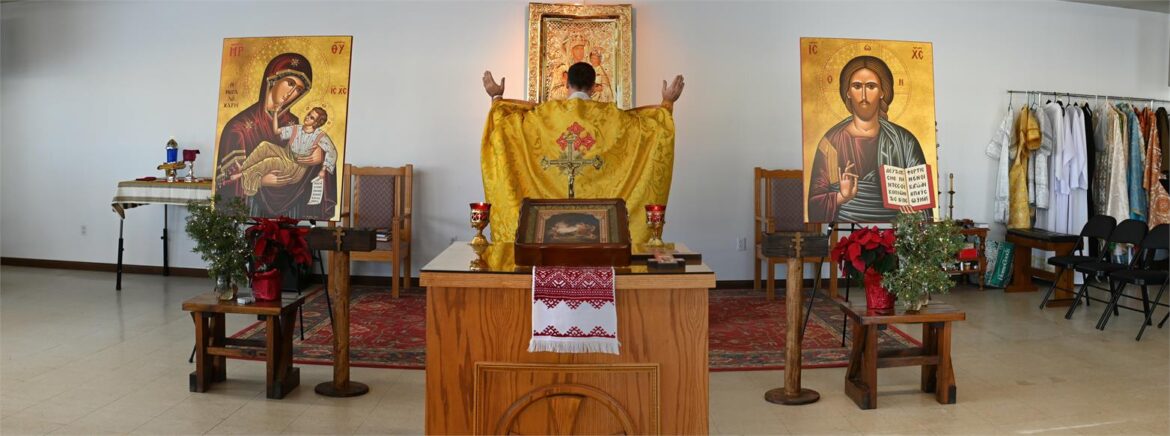
St Luke Ukrainian Greek Catholic Church

Cody

When St. Simeon took the Child Jesus into his arms, he was inspired by the Holy Spirit and chanted the hymn,

“Now You can let Your servant go in peace, 0 Master . .. ” (Lk. 2, 29-32),

which was integrated into the service of Vespers. In his inspired hymn, St. Simeon referred to Jesus as the “Light to the Gentiles,” it prompted the first Christians to carry a lighted candle or lamp in the procession that day, symbolizing the mystical presence of the “True Light” (In. 1, 9), Jesus. The solemn procession itself symbolized the journey of Joseph and Mary to Jerusalem in fulfillment of the Law.

In all the religions of the world, the symbol of the deity is the light and the lighted candle symbolizes the Divine Presence. This is more pronounced in the Christian religion in which God is referred to as the “Light” (In. 1, 5) and that He dwells in the ” inaccessible light.” (I Tim. 6, 16) In the Old Testament, God Himself ordered the Israelites to burn lamps as a sign of His presence among the people. (Lev. 24, 14)

In the New Testament, the Christians followed the same prescription as attested to by St. Epiphanius (d. 403) in his letter to the monk John of Jerusalem.

As the Saint was passing through the country around Anablatha, he passed by a building in which he noticed a ”lamp burning.” In answer to his inquiry, he learned that the building was a “Christian Church.” In our churches today, the Presence of a burning vigil-light indicates the Real Presence of Our Lord Jesus Christ in the Holy Eucharist on the altar.

St. John the Evangelist presents Our Lord Jesus Christ to us in his gospel as the” Light of Life” (In. 8, 12), a spiritual life, a life of grace. In this context, the burning candle presented to us at Baptism is a symbol of the new spiritual life we receive through the sacrament.

St. Matthew refers to light as a symbol of Christ’s teaching:

“The people that lived in darkness (of ignorance) have seen a great light .. . ” (Mt. 4, 16)

Hence the custom of having two lighted candles, one on each side of the Gospel, when it is read during a liturgical service, as explained by St. Jerome in 378 A.D. “In all the churches of the East, whenever the Gospel is to be read, candles are lighted although the sun is already shining. Of course, it is not done to dispel the darkness but to express our joy … Under the material light that Light is represented of which the Psalmist speaks:

‘Your Word, 0 Lord, is a lamp to my feet and a light to my path ‘ ” (St. Jerome, Against Vigilantius, 7).

The burning candles, then, flanking the Gospel during the reading, remind us that the teaching of Christ should enlighten us and guide us on our way to salvation as indicated by the words of Our Lord Himself:

”I am the light of the world; anyone who follows Me will not be walking in the dark, but will have the light of life.” (In. 8, 12)

In the East, this custom is mentioned for the first time in the biography of St. Sabas which was written in 556. It seems that this practice was introduced during the sixth century by the hermits who, in order to create a prayerful atmosphere in their caves, burned oil lamps or candles in front of the icons. (J. Moschus, Spiritual Meadow, 155) St. Germanus, the Patriarch of Constantinople (715-733) and a great defender of the veneration of icons, explained to one of his bishops:

”Let it not scandalize some that lights and incense are burnt before the holy images, for these rites were devised in their honor, .. . since visible lights are a symbol of their gift of divine grace and the burning incense is a symbol of pure inspiration and the fulness of the Holy Spirit.”

(Epistle to Bp. Thomas)

In 787, the Council of Nicaea II approved the custom of offering lights (candles or oil lamps) in honor of the icons of Our Lord, the Blessed Mother of God, the Angels and all the Saints, as well as in honor of the Holy Cross and the Book of Gospels, for ” this was a pious custom since ancient times.” (cf. The Decree of the /I Nicaean Council)

The burning candles and lights placed in front of the holy icons should remind us of the light of the exemplary lives they lived and inspire us to model our lives after their’s in imitation of their “good works.” (compo Mt. 5, 16)

The custom of blessing candles on the Feast of the Presentation was introduced to fill the “needs of the people.” (I Prayer of the Blessing) Its introduction into our Rite was relatively recent, during the seventeenth century, but its roots reach venerable antiquity. As recorded in The Chronicle of St. Theophanes, Emperor Justinian I had issued an order in 541 A.D. that on the Feast of the Presentation, a candle-light procession be held throughout the city to implore Divine Protection against pestilence and the numerous earthquakes that plagued the city.

And in answer to this holy gesture, God caused the pestilence and the earthquakes to subside. This gave rise to having similar processions on other occasions when the common welfare of the people was in danger.

These solemn processions, which eventually developed into Litia services in the fourteenth and fifteenth centuries, were later discontinued and limited only to the churches. The faithful, however, continued to use the candles as the means of Divine protection. This prompted the blessing of candles on the Feast of the Presentation which then were distributed to the faithful.

In homes, the blessed candles are lighted and placed before a holy icon in times of serious sickness or the threat of a storm to implore Divine protection, as the family is gathered in prayer. It is also used by the parents to dispel the fear in children caused by darkness or thunder.

The candle blessed on the Feast of the Presentation is also used when the Last Rites of the Church are administered to a member of the family. It should also be placed into the hand of the dying as the priest recites The Prayers for the Departure of the Soul, sending him to God as the ” champion of Faith” (St. John Chrysostom, Hom. on Hebr., IV, 7).

CONCLUSION

The blessing of candles on the Feast of the Presentation is closely related to the Gospel narrative, introducing Jesus as the “Light of the people” (Lk. 2, 32) The burning candle symbolizes the abiding presence of Jesus Christ in the midst of the Christian community as He, Himself, had promised :

“Where two or three are gathered in My Name, there I am in their midst.” (Mt. 18, 20) For this reason, the ritual of the Church prescribes that at least two candles be lit on the altar at all liturgical services, and the greater the solemnity, the greater the number of candles used.

The burning candles also create a more prayerful atmosphere in the churches. They remind us that our prayers should come from a heart burning with love of God and they should be directed toward heaven, where God abides in the “inaccessible light.” In this manner, candles make a positive contribution to the fervor of our prayers. The burning of a votive candle in church, besides its sacrificial value (donation), has also a symbolic meaning, namely, the continuation of our prayers after we leave the church.

Lighted candles are also carried in procession for the ” Glory of God” (cf. /I Prayer of Blessing) as well as for the support of our prayers, imploring Almighty God to show us His “mercy” (cf. I Prayer of Blessing).

From this “‘intercessory” character of processions, the protective power was ascribed to the candles blessed on the Feast of the Presentation.

Therefore, at the present time, the faithful use them to implore God’s help in their every sickness and distress.

17
0 FacebookTwitterPinterestWhatsappTelegramSkypeViberEmail

The following laws are quoted, with few changes only for clarity, from either the Code of Canons of the Eastern Churches (CCEO), the Particular Law of the Ukrainain Greek-Catholic Church, or the 1999 Pastoral Guide of the Ukrainian Catholic Church in the United States of America (i.e., Particular Canons for the United States) (USA):

Holy Days of Obligation

Canon 114 of the Particular Law of the UGCC, as adopted by our St. Nicholas Eparchy: 

  • § 1. The faithful are obligated to celebrate on the day of Great and Holy Pascha and all Sundays of the ecclesiastical year, on the patronal feast of their own parish [St. Luke the Evangelist, October 18th], on the feast of the Holy and Glorious and All-Praiseworthy Apostles Peter and Paul [June 29th] , and the Twelve [Great] Feasts, which are:
    1. The Nativity of our Most-Holy Sovereign Lady and Theotokos and Ever-Virgin Mary [September 8th];
    2. The Universal Exaltation of the Precious and Life-Giving Cross [September 14th];
    3. The Entrance into the Temple of our Most-Holy Sovereign Lady and Theotokos and Ever-Virgin Mary [November 21st];
    4. The Nativity of our Lord and God and Savior Jesus Christ [December 25th];
    5. The Theophany of our Lord and God and Savior Jesus Christ [January 6th];
    6. The Meeting [in the Temple by Symeon] of our Lord and God and Savior Jesus Christ [February 2nd];
    7. The Annunciation to our Most-Holy Sovereign Lady and Theotokos and Ever-Virgin Mary [March 25th];
    8. The Entrance of our Lord and God and Savior Jesus Christ into Jerusalem (Palm Sunday) [one week before Pascha];
    9. The Ascension of our Lord and God and Savior Jesus Christ [40 days after Pascha, always a Thursday];
    10. The Descent of the Holy Spirit (Pentecost) [50 days after Pascha, always a Sunday];
    11. The Holy Transfiguration of our Lord and God and Savior Jesus Christ [August 6th];
    12. The Dormition of our Most-Holy Sovereign Lady and Theotokos and Ever-Virgin Mary [August 15th]

    § 2. On these days the faithful are obligated to participate in the Divine Liturgy* and refrain from arduous physical labor.

Article 460 of the Pastoral Guide of the UGCC in the USA states: “The celebration of the Canonical Hours, especially Matins and Vespers must be introduced where they have fallen into disuse in parishes, especially since the decision of the Holy See now allows these canonical services to satisfy the Sunday and Holydays obligation of the faithful by their participation in them.”


Fasting and Abstinence

Fasting: from Canon 115 of the Particular Law of the UGCC

§ 1. The penitential practice of fasting, repentance, and abstinence, the purpose of which is to make amends for sins committed and to attain greater perfection for the sake of personal sanctification, is the oldest tradition of the Ukrainian Greek Catholic Church.

§ 2. All the faithful are obligated to fast in these periods of the ecclesiastical year: The Great Fast [from the Monday after Cheesefare Sunday to the Saturday of Lazarus] and Great and Holy Week [from Great Monday to Great and Holy Saturday inclusive]; The Apostles’ Fast (from the Monday after All Saints to June 28, inclusive); The Dormition Fast (from the feast of the Procession of the Precious and Life-giving Cross and the Maccabee Martyrs, Salome their mother, and the elder Eleazar [August 1] until the eve [Aug 14] of the Dormition of the most holy Theotokos, inclusive); The Nativity Fast, or “St. Philip’s Fast”, from the day after the feast of the Holy Apostle Philip until the eve of the Nativity of Christ [inclusive].

  1. On the first day of the Great Fast and on Great and Holy Friday it is a strict fast, that is one is to abstain from consuming meat and dairy products and eggs, and all dishes that contain these products.
  2. During the first week of the Great Fast and all the days of Holy Week one is to abstan from meat products and dishes.
  3. On Monday, Wednesday, and Friday of the other weeks of the Great Fast, one is to abstain from consuming meat products and dishes; on Tuesday and Thursday all types of food are permitted.
  4. In the other fasts of the ecclesiastical year the faithful are obligated to abstain from consuming meat products and dishes on Wednesday and Friday. On Monday, Tuesday, and Thursday all types of food are permitted.

§ 3. All the faithful are obligated to fast on these days: The eve of Theophany [January 5, except when it falls on Saturday or Sunday]; The Beheading of St. John the Baptist [August 29]; The Exaltation of the Holy Cross [September 14].

§ 4. On all Fridays of the year, except occasions of privileged [fast-free] weeks, the patronal feast or the 12 great fasts, one should abstain from meat products and dishes.

§ 5. On all days of fasting and during fast-free periods, the faithful  are obliged to refrain from organising and participating in loud parties, weddings, dances, entertainments, and other similar events.

§ 6. Concerning the dispensation from fasting, one must observe the following:

  1. The privileged weeks in the UGCC are: From the Nativity of the Lord [December 25] to the eve of Theophany, [January 4th], inclusive;  From the Sunday of the Publican and the Pharisee to the Sunday of the Prodigal Son;  From [the Sunday of] Pascha to the Sunday of St. Thomas; From the Sunday of the Descent of the Holy Spirit [Pentecost] to the Sunday of All Saints.
  2. There is no fast on Satuday, Sunday, and on the days of celebrating New Years (31.12 – 01.01)
  3. The following are exempt from any obligation to fast: children under 14 years of age and persons over 60 years of age; the seriously ill; pregnant women; mothers after childbirth and those who are breastfeeding; those who travel (if the travel time exceeds eight hours); those who do manual labour; those who eat from the table of others; the poor who live on alms;

§ 7. Outside the bounderies of the terretory of the major-archepicopal Church, the local customs regarding these things should be observed.


Yearly Requirements:

Reception of Holy Communion:

Every Catholic is obliged to receive Holy Communion at least once a year during the Paschal Season. Paschal Time extends from and is inclusive of the period of the Triodion and the Pentecostarion. Therefore, if one is conscious of mortal sin, one is bound to make a valid confession in order to fulfill this obligation. (USA)

The faithful of the Ukrainian Church are encouraged to receive Paschal Communion in their own Church if they can do so without serious inconvenience. (USA)


Religious Education of Children:

Parents have a serious moral obligation to oversee that their children receive adequate religious instruction offered by the canonical Ukrainian Catholic parish despite the school which their children attend (public or private, even if it be of another Catholic Church sui iuris, i.e. Roman Catholic) or “home school” which the children attend. (USA)

314
0 FacebookTwitterPinterestWhatsappTelegramSkypeViberEmail

“Rejoice, O Mother of God, full of grace, for from you has shone forth the Sun of justice, Christ our God, who enlightens all who are in darkness…” (Troparion of the Feast)

The Christmas cycle of feastdays concludes with the feast of the Presentation of our Lord on February 2nd, the fortieth day after the Nativity of Christ. This feast is closely connected with the Nativity of our Lord, for just as Christ’s divinity was revealed at his Nativity, so it is also manifested at his presentation in the Temple. From the meeting of the Divine Child and his most Holy Mother with the just Simeon, the feast in the Eastern Church receives its name “The Meeting or Encounter”. Here we shall consider the origin of the feast, its institution and the spirit of its service.

The Basis of the Feast
The feast of the Presentation or the Encounter is based on an event from the life of our Saviour, recorded in the Gospel of St. Luke (2,22-40). The law of Moses prescribed that every woman who gave birth to a male child was excluded from the temple for forty days, for during that time she was regarded as impure. These forty days were called “days of purification”. When this period of purification was ended, the mother of the newly born child went to the temple and offered a year-old lamb as a burnt offering, and a young pigeon or turtle dove, while a poor woman had to offer a pair of pigeons or a pair of turtle doves. The most Pure Virgin Mary, being the Mother of God, was not bound to submit to this rite of purification, for she was sanctified by the birth of Christ, as our kontakion stresses:

“You, O Christ, sanctified the Virgin’s womb by your birth.”

Nevertheless, in her humility, she fulfilled the prescription of the law and offered as a sacrifice two turtle doves.
In addition to this, another rite was performed over the firstborn male on the fortieth day – the rite of offering him up to God and his subsequent redemption. He who was to sanctify and redeem all mankind, desired that he, himself, first be consecrated to God and then redeemed. “The Eternal God,” says the stichera of Lytiya,

“who of old gave the law to Moses on Sinai appears this day as an infant. The Creator of the law fulfills the Law. He is brought into the temple and given over to the elder.”

Here the providential meeting or encounter of the Divine Child and his most Pure Mother with the righteous Simeon merits special consideration. St. Luke relates that Simeon

“was just and devout, looking for the consolation of Israel, and the Holy Spirit was upon him. And it had been revealed to him by the Holy Spirit that he should not see death before he had seen the Christ of the Lord.” (2,25-26)

Through divine inspiration, Simeon recognizes the Child Jesus as the Messiah. He takes him into his arms and with a beautiful prayer blesses the Lord God for the grace of seeing with his own eyes the Promised Redeemer. Our Church always concludes the Vespers service with the prayer of Simeon “Now you may dismiss…” Meanwhile, the aged Simeon predicts to the Most Holy Mother of God her forthcoming sacrifice and suffering because of Jesus Christ.

The Institution of the Feast

The feast of the Presentation or the Encounter originated in Jerusalem in the second half of the fourth century. First mention of it is made by the pilgrim Silvia Egeria in her Diary, where she calls it “the fortieth day after the Epiphany”. She describes its celebration in the following words:

“The fortieth day after Epiphany is indeed celebrated here with the greatest solemnity. On that day there is a procession into the Anastasis (Church of the Resurrection), and all assemble there for the Divine Liturgy; everything is performed in the prescribed manner with the greatest solemnity, just as on Easter Sunday. All the priests give sermons, as does the bishop also; all preach on the Gospel text describing how on the fortieth day Joseph and Mary took the Lord to the temple, and how Simeon and Ann, the prophetess, the daughter of Phanuel, saw him, and what words they spoke on seeing the Lord, and the offering which his parents brought.”

From Jerusalem the feast spread throughout the entire East, but only in the sixth century under Emperor Justinian (527-565) did it assume special significance. Emperor Justinian ordered that the feast of the Presentation or Encounter be regarded as a great feast and celebrated throughout the entire Empire. For this reason, in the service of this feast the Church prays several times for the emperor.
The motives for the solemn celebration of the feast of the Presentation were two extraordinary events: a plague in Constantinople and vicinity, and an earthquake in Antioch. At the end of the year 541 a plague, from which people died daily by the thousands, afflicted Constantinople and its surrounding districts. This plague lasted for three months. In addition to this, a great earthquake occurred in Antioch. Tradition reports that, at the time, a certain holy man received a revelation from God that the disaster which had befallen the nation would cease when the solemn celebration of the Lord’s Presentation had been instituted. The emperor ordered the feast of the Presentation to be solemnly observed and the plague ceased.
From the East, the feast of the Presentation passed over to Rome in the fifth century, and from there it spread to France and Spain in the seventh century, and then to Germany in the eighth century. Some ascribe its institution in the West to Pope Gelasius (†496), while others attribute it to Pope Gregory the Great (+604). Pope Sergius (687-701) is believed to have introduced the custom of holding a procession with candles on this feast, a custom that quickly spread from Rome to Jerusalem and other cities in Palestine. Cyril of Scythopolis (+557) in his “Life of St. Theodosius the Great” relates that a wealthy wife of a Roman official, named Icalia, built a beautiful church between Jerusalem and Bethlehem in honor of the Most Holy Mother of God and there introduced the custom of celebrating the feast of the Presentation with candles. The Patriarch of Jerusalem, Sophronius (tc.641), speaks of this custom also in his sermon on the feast of the Presentation. The light of the candles is a beautiful symbol of the true light of God our Lord Jesus Christ himself.
Carrying candles in procession on the feast of the Presentation seems to have been practiced earlier in Alexandria. In his sermon on the bringing of the Child Jesus to the temple, Cyril of Alexandria (†444) mentions the carrying of candles on that day. Theodotus of Ancyra (†446) speaks of the same custom being practiced in Ancyra. Blessing candles on the feast of the Presentation became a custom only after the tenth century. First mention of it is made in the Roman-German Missal of the twelfth century.
In the West, the feast of the Presentation originally was counted as a feast of our Lord; only at a much later date was it recognized as a Marian feast designated as, “The Purification of the Most Pure Virgin Mary”, or “The Offering of Jesus in the Temple”. The most recent prescriptions of the Latin Church promulgated at the Second Vatican Council again place the feast of the Presentation among the Lord’s feasts, designated as “The Offering of Jesus in the Temple”.
In the Eastern Church, the feast of the Presentation is celebrated as a Marian feast and is sometimes called, “The Meeting (or Encounter) of the Most Holy Mother of God”. This feast has a one-day pre-feast and a seven-day post-feast. Many Fathers and Doctors of the Eastern Church have sermons for this feast, and St. Andrew of Crete, St. John Damascene, St. Cosmas of Maiuma, Patriarch of Germanus and Joseph the Studite all have contributed to the liturgy of this feast. The Church solemnizes the memory of the Just Simeon and Anna on the day following the feast of the Presentation.

The Spirit of the Service of the Feast

The Spirit of the feastday service is the same as that of the Nativity of our Lord and the Theophany: to glorify the Theophany (manifestation of God) on earth, to extol the Divinity of Christ and give honor to the Most Pure Virgin Mary as the Mother of God. St. Cyril of Alexandria speaks beautifully of the profound content and significance of this feast in his sermon for this day:

“The Eternal,” he says, “is both a small Child and the ‘Ancient of Days’ (i.e., God). A Child at the breast and at the same time the Creator of ages. I behold a Child and recognize God. The Child is nourished and at the same time sustains the universe. The Child weeps and at the same time he gives life and joy to the world. The Child is in swaddling clothes and at the same time he delivers me from the bonds of sin… This Child the angels glorify him, the archangels bow before him. The Principalities tremble in his presence, the Powers praise him, the Cherubim minister to him, the Seraphim bless him, the sun praises him, the moon serves him, nature obeys him, fountains and seas yield to him… This Child conquered death, overcame the devil, abolished Adam’s curse,…washed away all sins, condemned all heresy, adorned all creation, saved Adam, renewed Eve, summoned all the nations and sanctified the universe… Therefore, let us all go forth to greet the Presentation of our Lord with splendor… Therefore, let us brighten this day with candles, as befits the children of light, and let us bring to Christ the Light of spiritual illumination.”
(Prologue, I)

The sticheras of Vespers, the Sessional hymns, the canon and the sticheras of the Matins service form one magnificent hymn of glory in honor of Christ’s Theophany (manifestation), celebrating the Incarnation of the Eternal Word of God, and extolling the Most Holy Mother of God. The small child, brought to the temple by his parents, is the Eternal God who gave the law to Moses on Mt. Sinai: “He who once gave the Law to Moses on Sinai,” we sing in the sticheras of Lytiya,

“today submits himself to the prescriptions of the Law, in his compassion, he has become like unto us for our sakes… Today Simeon takes into his arms the Lord of glory, whom Moses once saw in darkness, when on Sinai God gave him the tablets… The Creator of heaven and earth today is carried in the arms of the old Simeon.”

The Child we see today in the temple is the Messiah sent by God and foretold by the prophets:

“O Simeon, tell us whom you are joyfully carrying into the temple. To whom are you saying: Now you may dismiss your servant, O Lord, because my eyes have seen my Saviour? He is the child born of the Virgin. He is the Word, God of God! O Lord, who for our sake was incarnate and saved mankind, to you we bow in worship.”

And the Mother of the Child brought to the temple is the Most Holy Mother of God:

“Adorn your bridal chamber, O Sion and welcome Christ the King,” says the stichera of the aposticha in the Vespers service, “welcome Mary, the gate of heaven, for she has appeared as a cherubic throne on which the King of Glory is seated.” The Most Pure Virgin Mary is not only the Mother of Christ, but also our hope and our Mediatrix. In the ninth Ode of the canon of Matins, we entreat her: “O Virgin Mother of God, Hope of all Christians, protect, watch over, and guard all those who put their hope in you… O Virgin Mother of God, good helper of the world, protect and preserve us from every care and worry.”

Holy Church, seeing the great mystery of the Theophany and the love of God towards us, calls upon the faithful to give glory to Christ the Lord: “Let the choir of angels be amazed at this wonder, and let us mortal men raise our voices in song, beholding the ineffable condescension of God. Aged arms now embrace him before whom the powers of heaven tremble, he who alone loves mankind. (Sessional Hymn, Matins)

7
0 FacebookTwitterPinterestWhatsappTelegramSkypeViberEmail

“The Church is celebrating today the distinguished feast of the three Teachers, for they strengthened the Church by their divine dogmas.”
(Sessional of the Matins service of the Feast)

On the 30th of January, we celebrate the memory of three great and very outstanding bishops, teachers, preachers and Fathers of the Eastern Church: St. Basil the Great, St. Gregory the Theologian and St. John Chrysostom. Among our people, this feast is known as the feast of the “Three Saints”. These three hierarchs-bishops were giants of faith, courage, holiness and learning. They handed down to us the pure faith of the Council of Nicea; they expounded the dogmas of the Holy Trinity, Christ’s divinity and the Holy Eucharist. Because of their great merits, in her liturgy our Eastern Church calls them peers of the Apostles, instruments of the Holy Spirit, pillars of the Church and universal teachers of the whole world. All three lived in the fourth century – the golden age of the Christian faith. St. Basil and St. Gregory were sons of Cappodocia in Asia Minor, intimate friends of approximately the same age. St. John Chrysostom, an Antiochian, was younger than the other two by twenty years. Apostolic zeal for the holy faith and salvation of souls united them.

Outstanding Features of the Three Hierarchs
St. Basil the Great (329-279)

The parents and grandparents of St. Basil the Great were distinguished patricians, influential and fearless champions of the holy faith. Basil’s singular abilities and unusually keen mind, his insatiable desire for learning and his ample financial means, gave him access to the finest schools of learning and the most renowned professors of his time. The British historian, F. Farrar, describes St. Basil in this way: “His features and bearing, his slender form, his pale countenance, his keen eye, and grave manner bore witness to his noble birth. The natural excellence of his character rendered his enemies shy, but attracted his friends. He was a born leader who by Christian humility overcame, with difficulty, his natural consciousness of his own superiority.” (Lives of the Fathers, Vol. II)
The Servant of God Metropolitan Andrew Sheptytsky, O.S.B.M., in his introduction to the “Ascetical Works of Our Father St. Basil the Great” describes St. Basil thus:

“Basil was a man who had acquired a well-rounded education in all branches of contemporary learning; he was an excellent orator, an unparalleled expert in Holy Scriptures, an eminent dogmatist and polemicist in his battle against the Arians.”

St. Basil by nature was an ascetic and theologian. As the archbishop of Caesarea, he shone forth as a heroic defender of the holy faith, an efficient organizer, excellent orator, distinguished writer, reformer of liturgical services, zealous protector of orphans and the poor, and an outstanding legislator of communal monastic life. Because of his merits, holy Church bestowed upon him the title “Great”. Our Church recalls his memory on January 1, the day of his death.

St. Gregory the Theologian (c.326-290)

St. Gregory was named for his father who was a bishop in Nazianzen, in Cappodocia. Before he was even born, his pious mother, Nonna, made a vow to offer him up to the service of God. After he had grown to manhood, she gave him the Holy Bible, saying,

“As I promised even before your birth, I now offer you to God; I beg you, therefore, to fulfill my desire. You were born as a result of my prayers. For this I now pray, that you be perfect. I entrust to you, my son, this precious treasure. Use it throughout your entire life, and in the future you shall receive still more blessings.”

St. Gregory, like St. Basil, received a thorough education in the higher schools of learning. On his way to study in Athens, his ship was caught in a fierce storm at sea. At the time, he had not yet been baptized, and fearing lest he die without holy baptism, he made a vow that if he came out of the storm safely, he would consecrate himself to the service of God. In Athens, he met St. Basil and they became faithful friends and remained so throughout their entire lives. St. Gregory speaks briefly about their life in Athens: “We knew only two roads one to church to pray, the other to school to study.”
His father ordained him to the priesthood, and later St. Basil appointed him Bishop of Sazima. St. Gregory was the Archbishop of Constantinople for several years. He distinguished himself as a profound preacher; his sermons are pearls and masterpieces of sacred eloquence. St. Gregory had a great devotion to the Holy Trinity, regarding that dogma as the foundation of the Christian religion. Because of his deep knowledge of theology, he received the title “the Theologian”. In Byzantium, he was called the Christian Demosthenes. St. Gregory was by nature quiet, tender, sensitive and compassionate. He always dreamed of a life of prayer and contemplation in solitude. As a writer, he left sermons, poems and letters for posterity. He penned a sublime funeral oration in honor of his friend, St. Basil, and his father, Gregory. We celebrate the memory of his death on January 25.

St. John Chrysostom (347-407)

St. John Chrysostom was born in Antioch and labored there for many years as a zealous priest and an untiring evangelist. Preaching was an inseparable part of his life and soul. “I cannot allow one day to go by,” he said to his congregation, “without offering you nourishment from the treasures of Holy Scripture. “Although he was frail, nevertheless, he seemed to acquire new strength every time he ascended the pulpit to preach. He himself speaks of this: “Preaching makes me healthy. As soon as I open my mouth, all fatigue leaves me.” He captivated great throngs of people by his sermons. Most of his homilies were Scripture-oriented, and in these, he beautifully explains many parts of both the Old and New Testaments. For his ardent and moving sermons he received the title “Chrysostom-Golden-Mouthed”. St. John Chrysostom as priest and bishop was completely dedicated to his Church and to his faithful. He was a great friend and protector of the poor, widows and orphans. Because of his illustrious talents, he was raised to the arch-bishop’s throne in the capital city of Constantinople.
St. John Chrysostom was a zealous and completely dedicated pastor, a magnificent speaker, and a great teacher of faith and morals. He left over 800 sermons, a book on the priesthood, and numerous letters. In our native land of Rus-Ukraine, during the period of the Kyivan State, no other sermons were so widely known and read as his. Many translations and selections from his sermons appeared during the pre-Mongolian period, under such names as, “Zlatoust” (the golden-mouthed), “Zlatostruj” (golden-stream), “Izmaragd” (Greek emerald), “Marharyt” (Greek-pearl). The Collection of Prince Sviatoslav (1033) contains selections from the works of John Chrysostom, Basil the Great, Gregory the Theologian, Athanasius the Great, Gregory of Nyssa and others. We celebrate the memory of St. John Chrysostom twice a year: on November 13th, the day of his death, and on January 27th, the translation of his relics.

The Institution of this Feast

The feast of the Three Hierarchs is one of the very recent feasts of the Greek Church. A great dispute in the second half of the eleventh century gave rise to the institution of this feast. This controversy arose among Christians over which of these three Saints contributed the most to the Church. Some thought St. Basil to be the greatest, others, St. Gregory the Theologian, still others, St. John Chrysostom. Those who were advocates of St. Basil were called Basilians, those of St. Gregory Gregorians, and those of St. John Chrysostom – Joanites. This dispute was settled by the three bishops themselves. Each one separately, and later all three together, appeared to John, Bishop of the city of Euchaita (a suburb of Constantinople), who was known for his wisdom, learning and virtue, and said: “We, as you can see, are one before God and there is nothing between us that is contrary or controversial; each one of us, differently inspired by the Holy Spirit, taught that which was necessary for the salvation of man. Therefore, there is no first or second among us, but as you call one so shall the others be called. Arise, then, and command those who are arguing over us, not to divide themselves, for as during life, so too after death, our goal is to bring peoples from all corners of the earth to peace and unity. Institute, therefore, the celebration of our memory on the same day, as all three of us are of the same rank before God, and we shall help those to achieve salvation, who shall celebrate our memory.”
In 1076, Bishop John did as the three bishops commanded him. However, because the holy Church already celebrated the memory of each one separately, he designated the 30th of January as the day for their common feast. In addition to this, he had a sermon in their honor, and composed troparions, canons and sticheras. Our chronicles at the end of 1076 mention the institution of this feast in Greece.

The Three Hierarchs in the Service of the Feast

The service of the feast beautifully praises and glorifies the Three Hierarchs for their fervent love of God and neighbor, their unwavering faith, their significance for holy Church, their illustrious virtues, wisdom and intercession. “Basil divine intellect,” we sing in the aposticha of the Small vespers service, “Gregory – divine voice, John – most beautiful lamp. May they be glorified, these three distinguished representatives and ministers of the Trinity.” In the aposticha of the Solemn or Great Vespers service we sing: “O instruments of the Holy Spirit, and trumpets of divine thunder, O lightnings of preaching, O golden, light-bearing, resplendent lamps of God: O most blessed Basil, O most wise Gregory and O most venerable John, implore Christ our God to save those who honor you.”
In the sticheras of Vespers, Matins, and in the canons we find eulogistic and lofty expressions and parallels with which the Church expresses its admiration, respect, praise and veneration of the Three Hierarchs. Here are some of the expressions: “men of God”, “chosen vessels”, “pillars and support of the Church”, “defenders of the Trinity, fortresses of piety”, “divine and wise teachers”, “instruments of the Holy Spirit, veritable trumpets, orators of the word”, “earthly angels, heavenly men”, “distinguished vessels of the Spirit, solid defenders of the faith, pillars of the Church, support of the faithful, consolation of all sinners”, “oceanic streams, overflowing fountains, living-water pouring forth, limpid gems, earthly luminaries, ecclesiastical helmsmen, trees rich in fruit, treasuries of grace, mouths of Christ.”
Having before her eyes their greatness, merits and significance before God, holy Church invokes the faithful to give fit praise to the Three Hierarchs:
“Having come together with songs of praise, O lovers of feasts, let us praise Christ’s sanctifiers and the glory of the Fathers, the pillars of the faith, teachers and defenders of the faithful. Let us hail each of them in turn: Hail, luminary of the Church, immutable pillar, O wise Basil! Hail, O heavenly mind and great hierarch, Gregory the Theologian! Hail, O golden-voiced John, splendid preacher of penance. O spiritually-wealthy fathers, never cease to pray to Christ in behalf of those who with faith and love observe your sacred and sublime feast.”

8
0 FacebookTwitterPinterestWhatsappTelegramSkypeViberEmail

PRAYER:

O Great and Almighty God! Grant me the wisdom of my state of life, that I may accomplish everything that You desire, grant me the insight to understand my obligations and allow me to fulfill them as needed and required of me unto Your glory and for the welfare of my soul. Grant me the wisdom of your ways, and the wisdom to follow in the footsteps of Your holy will; grant me the wisdom of success and of failure, that I may not exalted myself in one and despair in the other, grant me the wisdom of joy and the wisdom of sorrow; may I only find comfort in that which leads to You, and may I find sorrow only in that which leads me away from You. Amen.

(From the Prayer of Metropolitan Andrey on the Wisdom of God)

WHY PASTORAL PLANNING?

We might say that the aim of Pastoral Planning is to help our parish communities and all their members BECOME WHO THEY ARE CALLED TO BE!

The following questions can help us focus on the basics:

Who are we? WE ARE CHRISTIANS, MEMBERS OF CHRIST’S CHURCH.

What do we believe? WE BELIEVE IN A TRIUNE GOD WHO DESIRES THE SALVATION OF THE HUMAN RACE.

What is our mission? TO GUIDE THE COMMUNITY OF GOD’S CHILDREN TO THE FATHER, THROUGH THE SON, IN THE HOLY SPIRIT.

How can our community fulfill this mission? BY BEING A VIBRANT PARISH – A PLACE TO ENCOUNTER THE LIVING CHRIST.


Pastoral Planning – is the process of recognizing human, spiritual and material gifts and coordinating their activity within the Christian community (an Eparchy or parish) in order to better fulfill its mission. In this process, conducted in a spirit of prayer and an awareness of the signs of the time, all members of the Christian community are called upon to participate under the guidance of their local Bishop and the pastor appointed by him.

Pastoral Planning is not just limited to preparing a calendar for a given year, (although the liturgical year is a very important element of pastoral planning). Pastoral planning always centers on the mission of the Church, and subordinates all natural and professional, spiritual, and material resources to a higher spiritual purpose: participation in Divine Life.

In 2005, our Synod of Bishops under the leadership of His Beatitude Lubomyr defined as a goal for our church: “Holiness of the united People of God.” Every initiative concerning the revitalization of our Church seeks to achieve this goal.

“THE VIBRANT PARISH – A PLACE TO ENCOUNTER THE LIVING CHRIST”

Characteristics of a “Vibrant Parish” of the UGC Church):


  1. The Word of God and Catechesis / Kerygma
  2. Liturgy and Prayer (and Eastern Christian Heritage)
  3. Service to one’s neighbour / Diakonia (and Focus on the Person)
  4. Leadership – Stewardship (and Spirit of Renunciation for Christ’s sake / Kenosis)
  5. Communion – Unity / Koinonia (and Witnessing and Serving Unity with the Successor of St. Peter)
  6. Missionary Spirit (and Accessibility and Openness)

Having these priorities, the question naturally arises: “How can these priorities be realized in my parish?

We invite you to envision a process of Pastoral Planning in four stages:

1) Count our blessings: How are we already fulfilling our mission as Church?

2) Dare to Dream: Imagine what might be possible to better fulfill our mission as Church?

3) Evaluate / Prioritize: What can be done and will have the greatest impact on our mission?

4) Design / Commitment: Concrete Plan of Action in fulfilling our mission as Church.

DEAR BROTHERS AND SISTERS,

FOLLOWING IS OUR PLAN.


  1. Daily Divine Liturgy as the source of Christian life.
  2. Confession before and after the Divine Liturgy, or by appointment.
  3. Matins Service before the Divine Liturgy on Sundays.
  4. First and Third Sunday of the month will be a catechism for all kids, after Sunday’s Divine Liturgy.
  5. Second and Fourth Sunday of the month, we will have Preparation for the First Confession and Solemn Communion for 2nd-grade students, after Sunday’s Divine Liturgy.
  6. Catechism for adults will be every third Wednesday of every month following Divine Liturgy.
  7. First Friday night vigil. Each month will change the focus of our prayer. For example, the first month we will display the miraculous icon of our Lady of Zarvanytsia, relics of St. Luke the next, and relics of St. Charbel the third month. During first Friday vigils we will have the Confession, Moleben, Rosary, Divine Liturgy, Sanctification of oil, prayers for healing, and anointing by Holy Oil. Our night vigils will start at 4:30 pm.
  8. Classes for Altar Boys will be every second Wednesday after the evening Divine Liturgy.
  9. During Great Lent time and Philip’s fast we will have a retreat (spiritual lectures for three days by an invited priest).
  10. The potluck will be once a month after Sunday Divine Liturgy.
  11. In the summertime we will have a family picnic outside town once a month.
  12. Every third Tuesday of the month we will have a pizza party for children with an activity such as a craft, game, movie or cartoon.
  13. We will try to organize a children’s choir.
  14. We continue to issue our bulletin.
  15. We will develop our website www.stlukecody.org, Facebook page, and YouTube channel.
  16. We have created parish and economic counsels blessed by Bishop Benedict.
  17. For solemn occasions we will invite Bishop Benedict and priests, especially our local priests of the Roman Catholic Church to join us in Divine Liturgy.
  18. We will collect the dates of birthdays for prayers on these days and weekly greetings after Divine Liturgy with singing “Many Years”.
  19. We would like to establish a group of individuals dedicated to praying for the intentions brought to them. This will be through a text group where members can share prayer intentions and prayer for the intentions brought to them. For this, we will need your phone number. Every participant can send text messages with requests for prayers.
  20. One time in a week we need to clean our chapel. We will announce after Sunday Divine Liturgy the day and time.
  21. We will begin to organize our parish library.
  22. We are planning to do some repairs in our hall and children’s room.

THANK YOU FOR YOUR PRESENCE IN OUR LIFE, AND YOUR SPIRITUAL AND FINANCIAL SUPPORT.

ONLY WITH GOD AND TOGETHER WE CAN LIVE IN LOVE IN PEACE AND BUILD A BEAUTIFUL HOUSE FOR OUR HEAVENLY FATHER.

ST. LUKE, PRAY FOR US!


THE VIBRANT PARISH PRAYER

O Lord Jesus Christ, our Good Shepherd, You

became incarnate to find the lost sheep of Your

flock and preached the Gospel, so they might

recognize Your voice. So also today graciously

look down from heaven upon our parish community, and send down on it Your Holy Spirit, that it might be a place to receive the joy of

Your Good News. Strengthen us with Your presence, and always gather us together in prayer.

Grant us the spirit of serving others, so that in

our parish all might encounter You, the merciful

God. Bless our spiritual leaders with Your wisdom, and inspire us to generously give of our

time, talents and treasure for the building up of

Your Kingdom. Unite us in peace and harmony,

as befits Your community of love. Instill in us a

missionary spirit, and let our parish community shine with the light of the Gospel, with prayer

and good works, inviting all to share in the divine life, so that Your Name, O Savior, may be

praised, together with Your eternal Father, and

Your most-holy, good and life-giving Spirit.

Amen.

55
0 FacebookTwitterPinterestWhatsappTelegramSkypeViberEmail

Taken from The Metropolitan Cantor Institute.

Of all the services of the Christian Church, there is one in which we come most closely into the presence of our Lord, God, and Savior, Jesus Christ. This is the service at which we commemorate our Lord’s sacrifice on the Cross and his Resurrection from the dead, at the conclusion of which we share in his Body and Blood. Among Catholics of the Latin Rite, this is called the Mass; among Eastern Catholic and Orthodox Christians, it is called the Divine Liturgy.

The Divine Liturgy as Sacrifice

It is natural for human beings to offer sacrifice – that is, to make an offering of some good thing to another person. A sacrifice may be a sign of honor and respect; it might be made in thanks to the other, or to seal a breach in a relationship. It is usually intended to somehow bind together the one making the sacrifice, and the one to whom the sacrifice is made. The value of the sacrifice depends on what it is that is sacrificed, and its meaning to the two parties; and on the intent and worthiness of the one making the sacrifice.

In the Old Testament, we see such offerings from the time of our first parents – for example, in the story of the sacrifice of Abel, whose offering to God was accepted, and of Cain, whose offering was not. In the Old Testament, fathers offered sacrifices for their families, and priests offered sacrifices on behalf of the people. God ordained certain sacrifices to be made in reparation for sin, and as thanksgiving offerings. Such sacrifices could consist of crops, incense, or animals, and were often accompanied by prayers that God would accept these sacrifices. Sacrifice formed a basic part of the covenant that God made with the people of Israel on Mount Sinai – that he would be their God, and they would be his people, keeping his commandments.

As God prepared to deliver his people from slavery in Egypt, he ordered that each family should sacrifice a lamb, and spread its blood on the doorposts of their home, so that the destroying angel sent against the firstborn of Egypt would “pass over” them; the family would then consume the lamb as “food for the journey.” Each year thereafter, the people of Israel were to repeat this meal, recalling their deliverance as if they themselves were present to see it accomplished. Thus, the Passover was both an event in the past, and one kept continually present – a sacrifice, and a meal that renews a covenant.

In the fullness of time, God sent his only Son to be born as a man, to teach, to suffer death on the Cross, and to rise again from the dead. The prophets of the Old Testament had spoken of a new sacrifice that would wipe away the people’s sins, and the words of John the Baptist, “There is the Lamb of God who takes away the sin of the world!”, made it clear that Jesus Christ (that is, the Messiah) was to be this new sacrifice. In his death on the Cross, Christ made a new covenant with the human race, in order to save them from their sins; in rising from the dead, he destroyed death and re-opened Heaven to those who had fallen.

In his last supper with the disciples, Christ offered bread and wine in the context of a Passover supper, and declared them to be his body and blood – “the blood of the covenant”, telling the disciples to do this “in remembrance of me.” For the Byzantine churches, the Divine Liturgy is precisely this remembrance.

As the Fathers remind us, the Eucharist or Divine Liturgy is a true sacrifice: we take God’s gifts, formed by human labor into bread and wine, and offer them to God, along with our prayers and thanksgiving. In doing so, we not only obey the command of the Lord Jesus, but our sacrifice is united to the one sacrifice he made on the cross, as the bread and wine become his body and blood by the power of the Holy Spirit. These gifts are then given back to us, to be received as Holy Communion, for our sanctification.

Thus, the Divine Liturgy is the one sacrifice of Jesus Christ on the cross, made present in our midst, and concluding with a meal that renews our baptismal covenant with God.

Themes of the Divine Liturgy

The central theme of the Divine Liturgy is thanksgiving – in Greek, Eucharist. We acknowledge all that God has done for us in gratitude. And in order to give thanks, we must first remember. (The Greek word for remembering is “anamnesis.”)

In the Old Testament, the act of remembering is continually emphasized. We are urged to remember all that God has done for us, as a people and as individuals; it is when we forget God and his goodness to us that we violate the covenant, and fall into sin. At the same time, God is asked to remember those same works, and do them once more in our day; and that he remember each and every one of us, for should he forget, we would return to the nothingness from which we were made.

In the New Testament, too, the disciples were told to offer the Eucharistic sacrifice “in remembrance of” our Lord Jesus Christ – and it was in the breaking of bread that the disciples at Emmaus recognized the Lord.

So in the Divine Liturgy, we remember all that God has done for us, recalling it solemnly through the words of the priest in the great Eucharistic prayer called the Anaphora, and offer him all that we have. Together with this sacrifice, we offer the one true, worthy sacrifice: the Lamb of God, our Lord Jesus Christ. It is the life, death, and resurrection of Christ – that is, the Paschal Mystery of God’s love for us – that we remember and offer.

The Divine Liturgy in the life of the Church

In the Byzantine Rite, the Divine Liturgy is essentially festive – that is, it is an occasion for joy. For this reason, it is not celebrated on days of fasting and penance (the so-called “a-liturgical days”).

The Divine Liturgy is normally celebrated on Sundays and feast days, as well as on Saturdays (according to tradition, we do not fast on either Saturday or Sunday). The Divine Liturgy may be celebrated on ordinary weekdays, Monday through Friday, except on the a-liturgical days.

In the Divine Liturgy, the local church is most clearly seen as gathered together in an orderly fashion, led by a priest who is empowered by ordination to offer sacrifice and prayers on behalf of the faithful. Word and actions emphasize the unity of the faithful. For this reason, it is traditional in the Byzantine Churches that there should only be one celebration of the Divine Liturgy in a particular church on a given day – “one altar, one liturgy.”

The bishop is the original celebrant of the Divine Liturgy, and it is still the case that a priest celebrates the service only by his permission. When the bishop participates in the service, wearing his episcopal vestments, certain hymns are added to the service or performed in a more solemn fashion; this is referred to as a hierarchical liturgy (“hierarch” means “high priest”, and is another word for “bishop”).

The liturgical books set various times for the Divine Liturgy to be celebrated, but it is almost always held at mid-morning. The morning is the time of hope, and the recognition in the light of day of all that God has done for us and given to us.

293
0 FacebookTwitterPinterestWhatsappTelegramSkypeViberEmail

Priest: Blessed be our God, always, now and for ever and ever.

All: Amen.

Priest: Glory be to You, our God, glory be to You.

All: Heavenly King, Advocate, Spirit of truth, Who are everywhere present and fill all things. Treasury of Blessings and Bestower of Life, come and dwell within us; cleanse us of all that defiles us, and, O Good One, save our souls.

Holy God, Holy and Mighty, Holy and Immortal, have mercy on us. (3x)

Glory be to the Father, and to the Son, and to the Holy Spirit, now and ever and for ever. Amen.

Trinity most holy, have mercy on us. Cleanse us of our sins O Lord; pardon our transgressions O Master; look upon our weaknesses and heal them O Holy One, for the sake of Your name.

Lord, have mercy. (3x)

Glory be to the Father, and to the Son, and to the Holy Spirit, now and for ever and ever. Amen.

Our Father, Who art in heaven, hallowed be Thy name. Thy kingdom come, Thy will be done on earth as it is in heaven. Give us this day our daily bread, and forgive us our trespasses as we forgive those who trespass against us, and lead us not into temptation, but deliver us from evil.

Priest: For the kingdom, the power and the glory are Yours, Father, and Son, and Holy Spirit, now and for ever and ever.

All: Amen. Lord, have mercy. (12x)

Glory be to the Father, and to the Son, and to the Holy Spirit, now and for ever and ever. Amen.

Come, let us adore the King, our God.

Come, let us adore Christ, the King and our God.

Come, let us adore and bow down to the only Lord Jesus Christ, the King and our God.

Psalm 127

Reader 1:

Unless the Lord builds the house, those who build it labor in vain. Unless the Lord guards the city, the guard keeps watch in vain. It is in vain that you rise up early and go late to rest, eating the bread of anxious toil, for he gives sleep to his beloved. Sons are indeed a heritage from the Lord, the fruit of the womb a reward. Like arrows in the hand of a warrior are the sons of one’s youth. Happy is the man who has his quiver full of them. He shall not be put to shame when he speaks with his enemies in the gate.

Psalm 128

 Reader 2:

Happy is everyone who fears the Lord, who walks in his ways. You shall eat the fruit of the labor of your hands; you shall be happy, and it shall go well with you. Your wife will be like a fruitful vine     within your house; your children will be like olive shoots around your table. Thus shall the man be blessed who fears the Lord. The Lord bless you from Zion. May you see the prosperity of Jerusalem     all the days of your life. May you see your children’s children. Peace be upon Israel!

Psalm 133

Reader 3:

How very good and pleasant it is when kindred live together in unity! It is like the precious oil on the head, running down upon the beard, on the beard of Aaron, running down over the collar of his robes. It is like the dew of Hermon, which falls on the mountains of Zion. For there the Lord ordained his blessing, life forevermore.

All: Glory be to the Father, and to the Son, and to the Holy Spirit, now and for ever and ever. Amen.

Alleluia! Alleluia! Alleluia! Glory be to You, O God. (3)

Troparion of Theophany

The people chant the Troparion of Theophany.

Troparion, Tone 1:

All: When You, O Lord, were baptized in the Jordan,* worship of the Trinity was revealed;* the voice of the Father bore witness to You,* naming You the beloved Son,* and the Spirit in the form of a dove confirmed the word’s certainty.* Glory to You, O Christ God,* who appeared and enlightened the world.

Gospel Reading (Luke 19:1-10 NRSV)

Priest: A reading from the Holy Gospel according to Saint Luke.

All: Glory be to You, O Lord, glory be to You.

Priest: Let us be attentive!

At that time Jesus entered Jericho and was passing through it. A man was there named Zacchaeus; he was a chief tax collector and was rich. He was trying to see who Jesus was, but on account of the crowd he could not, because he was short in stature. So he ran ahead and climbed a sycamore tree to see him, because he was going to pass that way. When Jesus came to the place, he looked up and said to him, “Zacchaeus, hurry and come down; for I must stay at your house today.” So he hurried down and was happy to welcome him. All who saw it began to grumble and said, “He has gone to be the guest of one who is a sinner.” Zacchaeus stood there and said to the Lord, “Look, half of my possessions, Lord, I will give to the poor; and if I have defrauded anyone of anything, I will pay back four times as much.” Then Jesus said to him, “Today salvation has come to this house, because he too is a son of Abraham. For the Son of Man came to seek out and to save the lost.”

All: Glory be to You, O Lord, glory be to You.

Priest: O God our Saviour, the True Light, You Who were baptized in the Jordan by John to renew all people by the waters of baptismal regeneration, and Who humbled Yourself to enter under the roof of Zachaeus, bringing salvation to him to all his household; as the same Lord, also keep us safe from harm. Grant to us Your blessing, purification and health of body; grant also our petitions that are for our salvation and eternal life. Å For You are blessed,together with Your eternal Father and Your most holy and life-creating Spirit, now and for ever and ever.

All: Amen.

The priest takes the bowl of Holy Water and sprinkling sprig, and being led by the candle bearer, walks through the entire house sprinkling all the rooms. On the farm, he can also bless the outbuildings and animals at this time.

While doing so, the family follows the Priest and candle bearer, continuously singing the Tropar of the Feast of Theophany.

After completing the sprinkling, they return to the table and the Priest says:

Priest: Glory be to You, O Christ, our God, our hope, glory be to You.

All: Glory be to the Father and to the Son and to the Holy Spirit, now and forever and ever. Amen. Lord, have mercy. (3) Give the blessing.

Priest: Christ our true God, Who willed to be baptized in the Jordan by John for our salvation, through the prayers of His immaculate Mother and all the saints, will have mercy and save us, for He is good and loves mankind.

All: Amen.

Priest: Grant, O Lord, a prosperous and peaceful life, health and salvation and the furtherance of all good things to all thy servants who dwell herein, and grant many years.

All: God, grant you many years! Многая Літа! (3x)

Kontakion, Tone 4: Today, You have appeared to the world* and Your light, O Lord, has been signed on us,* who with knowledge sing Your praises.* You have come, You have appeared, O unapproachable Light.

59
0 FacebookTwitterPinterestWhatsappTelegramSkypeViberEmail
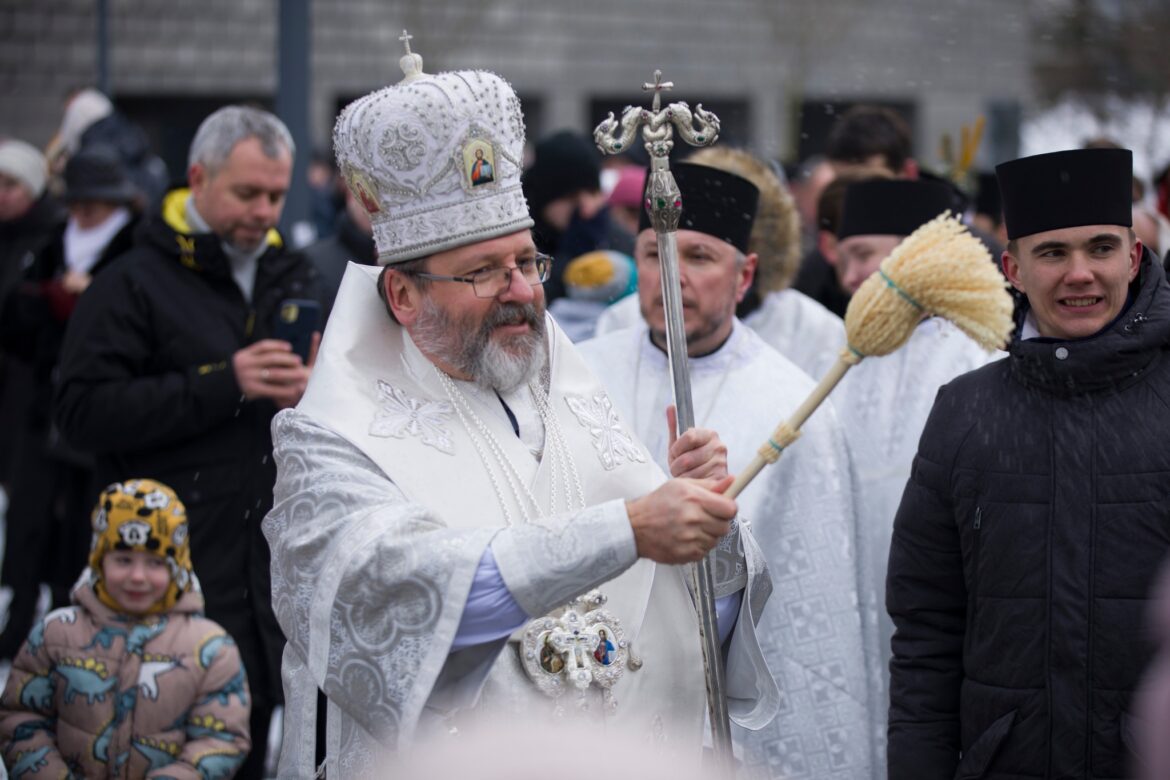
On the occasion of Theophany Feast, our congregation participated in the Divine Liturgy, which included the Jordan Blessing of water. During his homily, Fr. Roman underscored the significance of the words, ‘This is My beloved Son, in whom I am well pleased.’ He explained that these words symbolize God’s constant presence in every moment of Jesus’ life. Fr. Roman also emphasized the importance that we do not have to spare a word of encouragement to those who need it. We have to allow God to be revealed through our life.
Following the prayers, the Shoshone River water received the Jordan blessing.


50
0 FacebookTwitterPinterestWhatsappTelegramSkypeViberEmail

403 In Holy Scripture and the teaching of the Fathers, the meaning of the term mystery [which is the word for sacrament in various Eastern Christian languages] is particularly extensive. “The mystery of God’s will” is what Saint Paul calls God’s “plan for the fullness of time, to gather up all things in [Christ], things in heaven and things on earth” (Eph 1:9-10). For Christians, mystery ultimately means Christ in our midst (see Col 1:27). Therefore, knowledge of the mystery of God’s salvation is the knowledge of Christ, “in whom are hidden all the treasures of wisdom and knowledge” (Col 2:3). Briefly stated, mystery—the Mystery—is Christ, and all that he did and does for us.


404 After his Ascension, Christ continues to remain among his disciples—Christians throughout the ages—and to act for their and the whole world’s salvation. We proclaim this in the kontakion of the feast: “You ascended in glory, O Christ our God, in no way distant, but remaining inseparable.” These words echo the Lord’s assurance: “And remember, I am with you always, to the end of the age” (Mt 28:20). In his Church, Christ continues to teach, feed, heal, forgive, and revive. Thus, the Church herself can be called the mystery of his presence, the place
where God and people meet. The fifth-century Pope of Rome Saint Leo the Great explained: “That which till then [Christ’s Ascension] was visible of our Redeemer was changed into a sacramental presence.”

The Seven Sacramental Mysteries

405 The saving and sanctifying action of the Church is accomplished in seven Holy Mysteries. These are: Baptism, Chrismation, Eucharist, Repentance, Holy Anointing, Marriage, and Orders. Through these sacred actions of the Church, Christ grants the grace of the Holy Spirit. Through these Mysteries the Church sanctifies the faithful on their journey to the fullness of life in Christ. Through visible signs (e.g., water, chrism, bread and wine, the laying on of hands) Christ builds up his Church in the Holy Mysteries. In the liturgical actions of the Mysteries it is God’s grace that acts, and believers enter into God’s life. By participating in the visible form of a Mystery, that is, through the liturgical action, we become partakers of God’s salvific action of grace. “[The unbeliever], hearing of a laver, counts it merely as water: but I behold not simply the thing which is seen, but the purification of the soul which is by the Spirit.” The external form of the rite and its material expressions are vital as they signify our deification and manifest the first fruits of transfigured nature.

The Holy Mysteries Are a Synergy of God and Human Persons

406 The synergy, or joint operation, of God and human persons in the Mysteries, manifests itself as an exchange in which God discloses himself in love, grants his grace—his very life—to human persons, who receive this gift and in turn respond in love. The salvation of men and women consists precisely in their becoming capable, in Christ, of loving as Christ loved us (see Jn 13:34). In opening themselves to the gift of grace, human persons fully abandon themselves to the will of God in order to grow in faith, hope, and love, even “to the measure of the full
stature of Christ” (Eph 4:13).

The Mystical Life of the Church

407 Through Baptism, Chrismation, and the Eucharist, called the Mysteries of Christian Initiation, a person becomes a member of the Body of Christ and is enabled to participate in Christ’s priesthood, kingship, and prophetic mission. Through the Mysteries of Repentance and Anointing, called Mysteries of Healing, we receive both spiritual and physical healing. Through the Mysteries of Service, Priesthood and Marriage, Christians are consecrated to the service of the ecclesial community or to the domestic church.

Holy Mysteries of Baptism, Chrismation, and Eucharist are The Holy Mysteries of Christian Initiation

408 Participation in the life of the Most Holy Trinity becomes a reality for us through the Holy Mysteries of Baptism, Chrismation, and Eucharist. In other words, we partake of God’s life by being united to Christ, receiving the seal of the Holy Spirit, and sharing the Body and Blood of Christ in the community called Church. As a person after birth begins to breathe and then receives nourishment in order to live, so the newly baptized, born to new life in the baptismal font, begins to breathe by the Holy Spirit and receives the nourishment of Holy Communion in order to grow in Christ. Through the prayers and sacred actions of the liturgical rite of each of these Mysteries, the Church leads the faithful (the Greek Fathers speak of mystagogy—leading into the mystery) into an understanding of the Mystery and perceiving it as a single, unified action of God’s grace. This is why in the tradition of the Eastern Church, these three Holy Mysteries are celebrated together.

42
0 FacebookTwitterPinterestWhatsappTelegramSkypeViberEmail

About

The Holy Mystery of Orders is the continuation of Christ’s priesthood, which He bestowed upon His Apostles. There are three levels to this sacrament of ordination: the episcopate, the priesthood, and the diaconate.

The Ordination of Bishops

There is only one Mystery of Holy Orders, but there are three levels to the mystery. The first is that which Christ Himself bestowed upon His Apostles: the episcopate. A bishop is a man who is ordained to the episcopate by another bishop (in practice, usually by several bishops). He stands in a direct, unbroken line from the Apostles, a condition known as “apostolic succession.”
Ordination as a bishop confers the grace to sanctify others, as well as the authority to teach the faithful and to bind their consciences. Because of the grave nature of this responsibility, all episcopal ordinations must be approved by the Pope. And also each one is blessed by the Spirit with certain gifts and talents. The anointing also reminds us that our bodies are valuable and are involved in the process of salvation.

The Ordination of Priests

The second level of the Mystery of Holy Orders is the priesthood. No bishop can minister to all of the faithful in his Eparchy, so priests act, in the words of the Catechism of the Catholic Church, as “co-workers of the bishops.” They exercise their powers lawfully only in communion with their bishop, and so they promise obedience to their bishop at the time of their ordination.
The chief duties of the priesthood are the preaching of the Gospel and the offering of the Eucharist.

The Ordination of Deacons

The third level of the Mystery of Holy Orders is the diaconate. Deacons assist priests and bishops, but beyond the preaching of the Gospel, they are granted no special charism or spiritual gift.
In the Eastern Churches, both Catholic and Orthodox, the permanent diaconate has been a constant feature. In the West, however, the office of deacon was for many centuries reserved to men who intended to be ordained to the priesthood. The permanent diaconate was restored in the West by the Second Vatican Council. Married men are allowed to become permanent deacons, but once a married man has accepted ordination, he cannot remarry if his wife dies.

24
0 FacebookTwitterPinterestWhatsappTelegramSkypeViberEmail

© 2026-2027 – All Right Reserved. St Luke Ukrainian Greek Catholic Church