Sunday, June 28, 2026
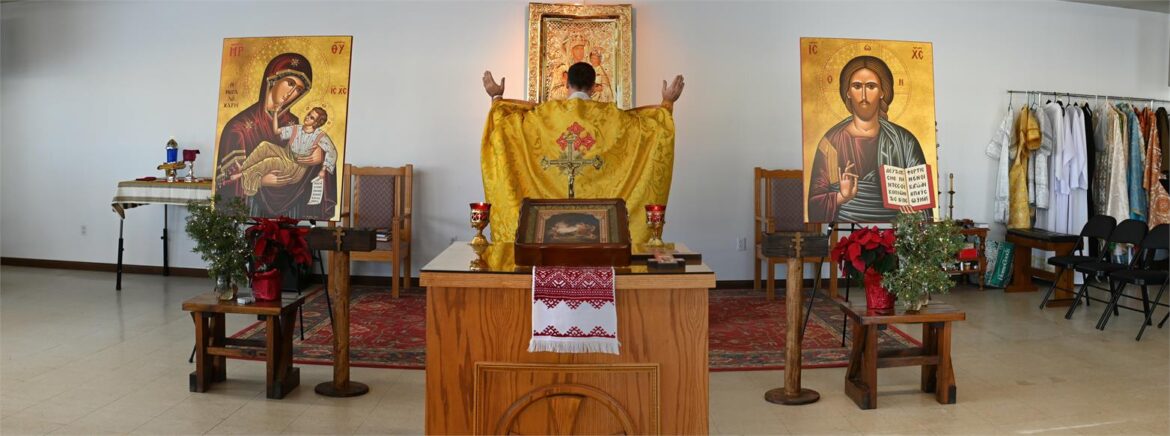
St Luke Ukrainian Greek Catholic Church

Cody

“Who ever prays and fasts has two wings lighter than the wind itself.”

(St. John Chrysostom)

The holy Apostles prepared themselves for the coming of the Holy Spirit with prayer and fasting. They prayed and fasted much before they went out to preach the Gospel. After prayer and fasting they ordained new presbyters for apostolic work, as we read in the Acts of the Apostles:

“And when they had ordained to them priests in every church, and had prayed with fasting, they commended them to the Lord, in whom they believed.”

(Acts, 14,22)

St. John Chrysostom said that “the Apostles almost always fasted.” (Sermon 57 on St. Matthew)

So also holy Church from earliest times has prepared her faithful with prayer and fasting for the great feast of the Major Apostles, SS. Peter and Paul whose memory we celebrate on June 29, along with the Synaxis of the Twelve Apostles the following day. Because this fast occurs after the holy season of Pentecost, in ancient times it was sometimes called the fast of the Pentecost. Other titles are also given to this fast; it is known as the fast of the holy Apostles, the Apostolic Fast, the Fast of Peter (Peter’s Fast) and the Summer Fast. Our people call it Petriwka (i.e., the Fast of Peter or Peter’s Fast). When was the Fast of Peter instituted? How long did it last? What are its prescriptions?

The Institution of the Fast of Peter

The fast of the holy Apostles is very ancient, dating back to the first centuries of Christianity. We have the testimony of St. Athanasius the Great, St. Ambrose of Milan, St. Leo the Great and Theodoret of Cyrrhus regarding it. The oldest testimony regarding the Petriwka fast is given to us by St. Athanasius the Great (+373). In his letter to Emperor Constance, in speaking of the persecution by the Arians, he writes: “During the week following holy Pentecost, the people who observed the fast went out to the cemetery to pray.” “The Lord so ordained it,” says St. Ambrose (+397), “that as we have participated in his sufferings during the Forty Days, so we should also rejoice in his Resurrection during the season of Pentecost. We do not fast during the season of Pentecost, since our Lord Himself was present amongst us during those days… Christ’s presence was like nourishing food for the Christians. So too, during Pentecost, we feed on the Lord who is present among us. On the days following his ascension into heaven, however, we again fast.” (Sermon 61)

St. Leo the Great (†461) says: “After the long feast of Pentecost, fasting is especially necessary to purify our thoughts and render us worthy to receive the gifts of the Holy Spirit… Therefore, the salutary custom was established of fasting after the joyful days during which we celebrated the resurrection and ascension of our Lord, and the coming of the Holy Spirit.”

The pilgrim Silvia Egeria in her Diary (fourth century) records that on the day following the feast of Pentecost, a period of fasting began. The Apostolic Constitutions, a work of the fourth century, prescribes: “After the feast of Pentecost, celebrate one week, then observe a fast, for justice demands rejoicing after the reception of the gifts of God and fasting after the body has been refreshed.”

From the testimonies of the fourth century we ascertain that in Alexandria, Jerusalem and Antioch the Fast of the holy Apostles was connected with Pentecost and not with the feast of the Apostles SS. Peter and Paul. In the first centuries, after Pentecost there was one week of rejoicing, that is Privileged Days, followed by one week of fasting.

The canons of Nicephor, Patriarch of Constantinople (806-815), mention Peter’s Fast. The Typicon of St. Theodore the Studite speaks of the Forty Days Fast of the holy Apostles. Simeon of Thessalonica (+1429) explains the purpose of this fast in this manner: “The Fast of the Apostles is justly established in their honor, for through them we have received numerous benefits and for us they are exemplars and teachers of the fast… For one week after the descent of the Holy Spirit, in accordance with the Apostolic Constitution composed by Clement, we celebrate, and then during the following week, we fast in honor of the Apostles.”

The Duration of the Fast of Peter

The Fast of Peter came into practice in the Church through custom rather than law. For this reason there was no uniformity for a long time, either in its observance or its duration. Some fasted twelve days, others six, still others four, and others only one day. Theodore Balsamon, Patriarch of Antioch (+1204), regarding the Fast of Peter, said: “All the faithful, that is the laity and the monks, are obliged to fast seven days and more, and whoever refuses to do so, let him be excommunicated from the Christian community.”

From the work “On Three Forty Days Fasts”, which is credited to a monk of the monastic community of Anastasius Sinaite (sixth-seventh centuries), we learn that the Fast of the holy Apostles lasted from the first Sunday after Pentecost to the feast of the Dormition of the Most Holy Mother of God. Later, however, the Fast of the Dormition was separated from it and the month of July was excluded from the Fast of Peter. Simeon of Thessalonica speaks of Peter’s Fast as of one week’s duration. The Syrian-Uniates reduced this fast to four days; the Syrian-Jacobites kept this fast along with the Greeks.

In our Church the Fast of the holy Apostles lasts from the Sunday of All Saints to the 29th of June, the feast of the Apostles SS. Peter and Paul. This fast may be of longer or shorter duration depending upon which day the Pasch (Easter) is celebrated. If the feast of Easter occurs sooner, then the Petriwka is longer; if Easter comes later, then the Petriwka is shorter. At its longest it could last six weeks, at its shortest, one week and one day. The duration of the Fast of Peter has remained the same as today since the beginning of Christianity in Ukraine.

Prescriptions of the Fast of Peter

The Fast of Peter is somewhat more mitigated than the Great Fast before Easter. The Kievan Metropolitan George (1069-1072) in his “Rules” does not allow meat or dairy products to be eaten during the Petriwka. On Wednesday and Friday, he prescribes dry food, that is, bread and water or dry fruits. On Tuesday, Thursday, Saturday and Sunday he permits fish twice a day and wine. In addition to this, he directs that one hundred prostrations (profound bows to the ground) be made daily, excepting Saturdays, Sundays and holy days. Since Metropolitan George was a Greek, we may assume that he prescribed for our Church the same practice on the Fast of Peter as prevailed in the Greek Church at that time.

The Synod of Zamost (1720) mentions that in our Church the Petriwka (Peter’s Fast) lasted from the first Sunday after Pentecost, that is, from the Sunday of All Saints to the feast of the Apostles SS. Peter and Paul. The Synod notes that laborers and villagers may be dispensed from the fast either partly or completely, since the fast occurs during the harvest season. During the Petriwka, the Synod of Lviv (1891) allows dairy products on Monday, Wednesday and Friday, and meat on the other four days of the week; however, it imposes upon the laity the obligation of praying five “Our Father’s” and five “Hail Mary’s” before and after the noon day meal and supper; religious must recite Psalm 50.

Wednesdays and Fridays – no meat or meat products.

34
0 FacebookTwitterPinterestWhatsappTelegramSkypeViberEmail
Dear Brothers and Sisters in Christ,
On this glorious day of the Pentecost, accept sincere greetings and gratitude.
 
As we know, all Apostles with Mary Mother of God were gathered together in expectation of the coming of the Holy Spirit. When they were praying and praising God the Holy Spirit descended on them. All of them were filled with Him and began to proclaim God’s Word with Love to all nations.
This happened almost two thousand years ago. However, the Holy Spirit acts always and everywhere even right now while you are reading this message. No obstacles exist for Him.
The Holy Spirit chose you to give birth to a new Church in a beautifully created World by our Heavenly Father. This place is our Cody, located in northwest Wyoming.  The wonderful town is surrounded by gorgeous mountains which tell us about God’s Glory. Every ray of the sun breaking through the peaks gives us Hope and Joy. Every wild creature and flower shows God’s care. Lakes and ponds mirror Heaven. Blowing wind expresses God’s power. The Lord chose this place to be glorified in the Holy Trinity through the crown of His creation – you and me. He desires to be among us. For that reason, through us, He established His Church.
As Mary was with the Apostles at prayer in the Upper Room so we gather in our St. Luke chapel to praise and give thanks to the Lord for your help and support. May the Holy Spirit dwell in your hearts and fill your lives with His Gifts. Only in the Holy Spirit can we reach our final destination. As it is written: “What no eye has seen, what no ear has heard, and what no human mind has conceived” — the things God has prepared for those who love him.
So, we continue our mission to become closer to our Heavenly Father and ask you to be with us in this journey of creating the beautiful church in this beautiful corner of the world.
THANK YOU!!!
YOU ARE ALWAYS IN OUR PRAYERS!
32
0 FacebookTwitterPinterestWhatsappTelegramSkypeViberEmail

355 After his baptism by John in the Jordan, Jesus began his preaching, crying out: “The time is fulfilled, and the kingdom of God has come near; repent, and believe in the good news” (Mk 1:15). He preaches the kingdom for three years and brings it to fruition in the Paschal Mystery.

At the Mystical Supper, Christ gave the apostles a share in the kingdom-his divine life-through the Word and the Eucharist.

356 This joining of the Word and the Mystery is not a coincidence. As the Mother of God first received the Word into her heart and united herself to him, so also we receive the Word into our hearts and put it into practice when we join ourselves to him in the mystery of Communion: “My mother and my brothers are those who hear the word of God and do it” (Lk 8:21; see Mt 12:50 and Mk 3:35). This is why in the Divine Liturgy Christ feeds us first with his Word (in the Epistle, the Gospel, and the homily), and then with his Body and Blood (Communion).

357 We approach the Liturgy of the Word not as a simple recollection of Christ’s preaching long ago, but rather as the living Word. Christ continues to preach today, and we not only read this Word but also receive it as nourishment (see Lk 24:13-34). Through the proclaimed and preached Word in the liturgical assembly, Christ himself addresses the whole Church community and every member individually.

The Exclamation “Blessed be the Kingdom” and the Litany of Peace

358 As the public activity of Christ began with the proclamation that God’s kingdom was at hand, so the Liturgy begins with the announcement that the kingdom is present. Signing the Holy Table with the Gospel Book cross-wise, the priest exclaims: “Blessed be the kingdom of the Father, and of the Son, and of the Holy Spirit, now and for ever and ever.” To this the participants at the Liturgy respond: “Amen” (from the Hebrew, meaning let it be so). By this response they assert that the kingdom is truly among us and that they long for it to thrive and grow.

359 In the Litany of Peace we bring before the Lord the Church’s prayer for the whole world. This is the way the liturgical assembly affirms the manifestation of God’s kingdom. The Church’s prayer for the world is an expression of faith that all is in the hands of the Lord. It also expresses our readiness to accept from the Lord whatever answer he might wish to give. The name of the Litany of Peace indicates the need for inner peace and reconciliation with all. The first petition of the Litany indicates that Christ himself is our peace (see Eph 2:14) and that it is in him that we pray. The petitions of the Litany of Peace express concern for the good of the Church, of the country in which we live, and of all creation. The Litany of Peace teaches the faithful to place common needs before private ones. The prayer “Lord, have mercy,” repeated by the faithful as the community’s response to the petitions, includes both the request for God’s merciful love and the community’s faith that he unfailingly proffers that love.

The Antiphons of the Liturgy

360 The kingdom of God is the fulfilment of all the prophecies and promises of the Old Testament. In order to understand more fully and to accept more intensely the kingdom, we recall these prophecies and promises. We sing psalm verses that express them and a refrain that conveys their fulfilment in Christ. In the solemn hymn, “Only-begotten Son,” we profess that the fulfilment of all that God promised is to be found in the Incarnation and Paschal Mystery of Christ. By singing the refrains “Through the prayers of the Mother of God…” and “Through the prayers of your saints…” we unite ourselves to those in whom this salvation has already been accomplished. This type of singing of the psalms with a refrain is called antiphonal because two alternating choirs (krylosy or scholae) sing them. In the Divine Liturgy there are three antiphons ending with the Little Entrance. In the prayers between the antiphons we profess God’s “love for mankind which is beyond expression” and Christ’s promise to “grant the request of two or three who join their voices in [his] name.”

The Little Entrance, the Troparia, and the Thrice-Holy Hymn

361 While in the singing of the antiphons we experience anticipation of the kingdom and our drawing near to it, the Little Entrance shows that by following Christ we already enter the kingdom; we enter heaven, the fullness of God’s life. Thus, we pray: “Grant that as we make our entrance, the holy angels may enter too, serving with us and joining in the praise of Your goodness.” By the words “Wisdom! Stand aright!” the deacon calls us to direct our attention to the Word of God. The faithful respond by venerating his Wisdom, which is manifested in the Gospel Book. They prepare their hearts to receive the Word during its proclamation. Thus, bowing their heads, the faithful sing: “Come, let us worship and fall down before Christ.”

362 The priest enters the sanctuary with the Gospel Book. This is a sign that it is Jesus Christ, the only High Priest, who celebrates the Divine Liturgy. Christ is invisibly among us, and it is he who leads us to the altar (just as the Gospel Book carried by the deacon precedes everyone). The bishop or priest represents the eternal High Priest who offered the perfect sacrifice once and for all, ascended to heaven, and entered the heavenly sanctuary, sits at the right hand of the Father (see Heb 9:11-14, 23-28).

363 Then follow the troparia and kontakia. These are hymns in honour of a feast or saint, with invocations to Christ, the Mother of God, or saints, and they frequently reveal the theological substance of a feast or commemoration. Thus the Church celebrates and manifests the unfathomable paths by which the Lord led, and continues to lead, each of the faithful into his kingdom.

364 We express our entrance into the kingdom, our being raised to heaven, and our contemplation of the Most Holy Trinity in the words of the Thrice-Holy Hymn: “Holy God, Holy and Mighty, Holy and Immortal, have mercy on us.” Thus we join the heavenly choirs in their singing. In the Prayer of the Thrice-Holy Hymn “standing before the glory of [the] holy altar,” we entreat the Lord to “accept from the lips of us sinners the Thrice-Holy Hymn and visit us in [his] kindness.”

365 During the singing of the Thrice-Holy Hymn, the hierarch ascends the “throne on high.” As the Epistle is read, the bishop is seated on his throne (in Greek, cathedra), along with the priests to his right and to his left. They thus represent Jesus Christ among the apostles, and symbolize the authoritative teaching ministry of the Church.

Hearing the Word of God, Responding to It, and Prayer

366 By his Word the Lord created the world; by his Word at Sinai he called to ministry his Chosen People; in the incarnate Word he gave his people salvation. We are called to receive the Word of God and to answer to it in faith: “All the words that the LORD has spoken we will do!” (Ex 24:3). To truly hear the Word of God means to act on it: “Blessed rather are those who hear the word of God and obey it!” (Lk 11:28). Those who listened to John in the desert and those who listened to Peter on the day of Pentecost asked: “What then shall we do?” (Lk 3:10; Acts 2:37). When we respond to the Word, we receive its life-giving power and, as did the Mother of God, we preserve it in our hearts and flesh it in our lives.

367 The Word of God shines in our hearts “the pure light of … Divine knowledge,” as the Prayer before the Gospel teaches us. To hear the Word of God means “to understand the message of [the] Gospel” in order to accept it as “blessed commandments that we may subdue all carnal desires and follow a spiritual way of life, thinking and doing all that pleases” God. We incline our heads during the reading of the Gospel as a sign of reverent listening and acceptance of the Word of God, In the homily, the priest proclaims the Good News about the mighty deeds of God, calls us to embody the Word we hear: “[He] instructs and exhorts [us] to the imitation of these good things. “290 The faithful listen to the Word of God, which the Lord addresses to them through the reading of the Epistle and Gospel, and through the homily. They receive the Word of God into their hearts as a seed that should bring forth good fruit in their lives. Receiving in this way communion in Christ the Word, they become its bearers and heralds.

368 In the Insistent Litany, the Church prays “that we may be accounted worthy, having learned the truth, by our deeds also to be found good citizens and guardians of what is commanded, so that we may be saved with eternal salvation. “291 Whereas in the Litany of Peace at the beginning of the Liturgy we prayed for the whole world, in the Insistent Litany we mention the faithful by name, we add the special petitions of the assembly in response to the received Word of God, and we entreat God’s help for the different circumstances in the lives of the faithful.

369 In the Litany for the Catechumens, the faithful pray for those preparing for Baptism. They pray that the Lord would “teach them by the word of truth” and (during the second half of Lent) that the Lord “number them among [his] chosen flock.” The catechumens were admitted to the Banquet of the Word in order to help them achieve spiritual maturity and heal spiritual illnesses. Before the beginning of the Banquet of the Eucharist, however, they were dismissed. “Only the faithful” (the baptized) remained, those who had gathered to be nourished by the food of eternal life the Body and Blood of our Lord Jesus Christ.

Source: Catechism Christ our Pascha

Previous post: The Divine Liturgy (PROSKOMIDIA)

49
0 FacebookTwitterPinterestWhatsappTelegramSkypeViberEmail
Dear Mothers,
On this beautiful day, we celebrate Mother’s Day. This day is a good opportunity to remember all our Mothers with Love and Thankfulness.
Our earthly Mother gave us the gift of life and dedicated her life to us to be good people and to be God’s children. This day is a good opportunity to ask ourselves if I am a good son or daughter.
Our Heavenly Mother shows us the way to Heaven and always keeps us in Her prayers.
Our Godmother held us during our Baptism and took responsibility for our spiritual education.
Our grandmother always shows her love and hospitality.
And our Motherland where we were born, enriches us, her children.
Heavenly Father we are grateful to you for our Moms. It’s a great honor to bear the name of a son of a daughter.
Bless all of us and be with us always in every moment of our lives.
Dear Mothers, accept our sincere greetings and prayers on this special day for you and us. Your Love and Kindness are sewn into our hearts. And through your prayers, these seeds are growing and giving good fruits in our lives. Because of you, we are who we are. We appreciate your Motherhood and your sacrifices and we are grateful to you. As a sign of our thanksgiving accept our prayers. And also, for these Moms who were called by our Heavenly Father, we raise our prayers and we know that you are in good company with our Heavenly Father and Mother.
Happy Mother’s Day!
In Christ, Fr. Roman Bobesiuk!
21
0 FacebookTwitterPinterestWhatsappTelegramSkypeViberEmail
Christ is Risen!
It is with great joy that we invite all our Parishioners to the upcoming visit of Bishop Benedict Aleksiychuk to Cody, and the regional area.
We are so blessed to have His presence on June 2nd; this is very apropos, as we will have the First Confession and Solemn Communion of our children and induction of our Altar Servers.
Join us for Liturgy and fellowship on Sunday June 2nd at 9:30 am in St. Luke’s Chapel (1922 Big Horn Ave, Cody)
Please feel free to stop and visit with His Grace after Divine Liturgy.
We will have a potluck. Please bring your favorite meal to be shared.
We are waiting for you!
Also, Bishop Benedict is going to visit the newly created Ukrainian Catholic Mission in Casper (Casper’s Ukrainian Catholic Mission) on Monday, June 3rd at 6:00 PM. Location: 1474 Willer Drive, Casper, WY 82604
64
0 FacebookTwitterPinterestWhatsappTelegramSkypeViberEmail

St. Luke UGCC extends our congratulations to Cyrus Charbel Walker and Basil Peter Nylander, who both received the Holy Mysteries of Initiation (Baptism, Chrismation & First Eucharist) on Sunday, April 28, 2024. May God grant to the newly baptized and their families and godparents, peace, health, and happiness for many years, na mnohaja i blahaja l’ita!

FYI.

Holy Mysteries of Baptism, Chrismation, and Eucharist are The Holy Mysteries of Christian Initiation

Participation in the life of the Most Holy Trinity becomes a reality for us through the Holy Mysteries of Baptism, Chrismation, and Eucharist. In other words, we partake of God’s life by being united to Christ, receiving the seal of the Holy Spirit, and sharing the Body and Blood of Christ in the community called Church. As a person after birth begins to breathe and then receives nourishment in order to live, so the newly baptized, born to new life in the baptismal font, begins to breathe by the Holy Spirit and receives the nourishment of Holy Communion in order to grow in Christ. Through the prayers and sacred actions of the liturgical rite of each of these Mysteries, the Church leads the faithful (the Greek Fathers speak of mystagogy—leading into the mystery) into an understanding of the Mystery and perceiving it as a single, unified action of God’s grace. This is why in the tradition of the Eastern Church, these three Holy Mysteries are celebrated together.

334
0 FacebookTwitterPinterestWhatsappTelegramSkypeViberEmail

The Divine Liturgy-the Foundation and Summit of the Christian Community’s Life

343 “Do this in memory of me; for as often as you eat this bread and drink this cup, you proclaim my death and confess my Resurrection.”

In Christ, human nature partakes of the divine nature (see 2 Pt 1:4). Christ grants to everyone who believes in him communion in divine life. Christ accomplished this mystery of Communion at the Mystical Supper, manifested it in his Paschal Mystery, and continues to actualize it in the Divine Services of the Church “now and for ever and ever.”

344 The summit of the Church’s liturgical life is the Divine Liturgy (from the Greek leitourgia, meaning a common work). It is the service of God to his people and of God’s people to him. In the Divine Liturgy the Father leads us into the fullness of his life by giving us his Son. The Son then gives himself to us as nourishment, in the banquet of the Word, and in the banquet of the Body and Blood. He does so in order that we might become one body and blood with him and partake of his Divinity. Receiving Christ’s gift in the Holy Spirit, the Church responds to him by offering herself. She does so in order that he might live and act in her as in his Body. And so, Christ, the head of the Church, together with the Church, which is his Body, brings to the Father in the Holy Spirit praise and thanksgiving for the salvation that has already been accomplished.

345 The Divine Liturgy consists of (a) the Proskomide (from the Greek, meaning offering) or Prothesis (from the Greek, meaning setting forth), that is, the preparation of the gifts; (b) the Liturgy of the Word; and (c) the Liturgy of the Eucharist. In the Divine Liturgy the mystery of salvation is accomplished. This salvation is the bringing together of God and humankind in Christ (see Eph 1:10), the “building up of the body of Christ” (Eph 4:12). Just as at the Mystical Supper [Last Supper] Christ first taught the apostles by his word and then led them into the mystery of his Body and Blood, so in the Divine Liturgy Christ teaches the community of the faithful, nourishes it by his Word, and then makes its members partakers of the Eucharistic banquet. The Christian enters into this mystery through listening to the Word of God and partaking of the Lord’s Body and Blood.

Preparation for the Divine Liturgy

346 Before the beginning of the Divine Liturgy, the clergy recite the entrance prayers and put on the liturgical vestments. In the prayers before the iconostasis, they pray for the forgiveness of their faults. Aware of their human frailty, they beseech the Lord, by the prayers of the Mother of God, to strengthen them for this service.

347 The meaning and symbolism of all the liturgical vestments are well illustrated by the prayer for putting on the sticharion: “He has placed on me, as a bridegroom, a crown; he has adorned me, as a bride, with jewels.” At the Liturgy, the priest represents Christ the Bridegroom before the community and also the Church as the Bride before God.

THE PROSKOMIDIA

The Liturgy of St. John Chrysostom has three main parts. Practically all the liturgists maintain this division, which is very old and accepted by long tradition. The structure of the Divine Liturgy almost demands such a division because the above mentioned three parts form a logical and very obvious inter-related whole. This division is further substantiated by the historical development of the Liturgy as well as by the contents of the individual parts. Because the Church no longer restricts the catechumens to only the first parts of the Liturgy, we will emphasize the didactic character of this part by calling it the Liturgy of the Word. Similarly, in order to stress the sacrificial nature of the final part of the Liturgy of the Faithful, we term it the Liturgy of the Eucharist.

The first part of the Liturgy is called the Proskomidia. It is the introductory, or rather the preparatory, part of the Divine Liturgy. Because the priest performs it privately without active participation of the faithful present, for most people it is unperceived, almost unknown. They consider it as a private ceremony of the priest, which has only a vague relation to the Liturgy itself. If we consider its origin, history and development, however, we can easily discover that the Proskomidia is of great importance and it is a key to open the understanding and to indicate the spirit of the entire Liturgy.

The name Proskomidia comes from the Greek word proskomidzo, which means “to bring” or “to offer.” The Proskomidia is the ceremony of the offering or bringing the bread and wine, which later in the Liturgy will be changed into the Body and Blood of Jesus Christ. There is another name for the Proskomidia, the Prothesis, a Greek word for “ante-deposition”. This appellation indicates that the priest sets the bread and wine on this table for the future consecration. One of the final prayers of the Prothesis, in which the priest beseeches God “to bless these gifts placed here before You and accept them on Your heavenly altar” clearly indicates this. In the Roman rite the Proskomidia is known as the Offertory.

The origin of the Proskomidia goes back to apostolic times. It was undoubtedly a part of the very ancient form of the Divine Liturgy, although not in the same arrangement as we know it today. The original Proskomidia developed from an old Christian custom of bringing offerings to the Divine Liturgy. According to St. Justin Martyr (2nd cent.), Christians who were mindful of the Scriptural command that “no one shall appear before the Lord empty-handed” brought various gifts for the celebration of the Liturgy, the most important of which were bread and wine. From these gifts the priest or deacon selected as much as was needed for the Liturgy, and the remaining food, which often included oil, honey and fruits, was used for the so-called Agape (love-feast), celebrated following the Liturgy.

This selection and preparation of the bread and wine for the Liturgy came to be called the Proskomidia (offering), after the presentation of the gifts by the faithful. Originally the gifts were handed by the people to a deacon who placed them on the table called the prothesis. Hence the reason why the Proskomidia was called by some the Prothesis. The ceremony was usually performed after the Liturgy of the Word, an ancient usage which has been retained in the pontifical Liturgy to the present time. The bishop or priest, after reading pericopas from Holy Scripture, selected the necessary gifts.

There is no doubt that the formation of the Proskomidia was largely influenced by the situation in which the early Church found itself. During the first three centuries of persecution the Church had no other support but from her faithful. It was an accepted custom that the wealthier Church members brought gifts to the places of worship which were used not only for liturgical purposes but also for the maintenance of the clergy and poorer members of the Christian community. The offering of the gifts (Proskomidia) has thus a charitable overtone.

It is difficult to establish the exact time when this custom was discontinued. Most probably it happened gradually during the fifth and sixth centuries, The cessation of this custom also marked the end of the active participation of the faithful in the Proskomidia. It became the exclusive activity of the celebrating priest. At the same time, the entire ceremony was moved from the beginning of the Liturgy of the Eucharist to the beginning of the Liturgy of the Word. With all probability this transfer occurred during the sixth and seventh centuries when the Church abolished the Catechumenate. The first available document in which the Proskomidia appears before the beginning of the Liturgy is the Codex Barberini (8th cent.).

That the original place of the Proskomidia was before the Liturgy of the Eucharist is evident from numerous liturgical documents. One of the oldest such documents, “The Testament of Our Lord Jesus Christ”, which recorded many other liturgical rubrics, forbids the acceptance of the bread from a Catechumen. It states: “It is forbidden to accept bread from a Catechumen, even if he would have a baptized son or wife, and would wish to bring an offering in their stead. His offering should not be accepted before he is baptized.” From this prohibition it clearly follows that the offering of the bread and wine, or the Proskomidia, was a part of the Liturgy of the Eucharist, because the catechumens were excluded from it.

THE PREPARATION FOR THE PROSKOMIDIA

What is most holy must be treated in a most holy manner. Therefore a careful preparation for the Divine Liturgy is required and is of paramount necessity. If the priest of the Old Testament was obliged to approach the altar following a proper and very meticulous preparation of the soul and body, how much more preparation is required of the priest of the New Testament, who offers the unbloody sacrifice of the Body and Blood of Jesus Christ? Actually the entire life and conduct of a priest should be a remote preparation for the Liturgy. But when the hour of the Liturgy draws near, he has an immediate and special preparation to make. He should dispose his soul and excite his heart by mental and vocal prayer for this, the greatest moment of his entire day. Before the Divine Liturgy, the priest must be composed. Man’s attention is broken into a thousand fragments by the variety of things and persons about him. His mind is restless; his feelings seek objects and persons about him. His will is captured by a thousand intentions, often conflicting. Composure restores unity of the spirit. It frees man’s mind from its many conflicting claims and focuses it on one, the all-important. Only a composed person is really someone. Only he can seriously address someone and be capable to ponder the replies.

The rubrics of the Liturgy clearly call for this state of mind. The priest who intends to celebrate the Divine Mystery should be reconciled, first of all, with God, then with everyone and have no animosity toward anyone. To the best of his ability, he must keep his heart free from evil thoughts. He must abstain from food and drink in accordance with ecclesiastical legislation. The warning words of St. Paul refer in the first place to the priest: “For he who eats and drinks unworthily (the Body and Blood of Christ), eats and drinks judgment to himself”. The rubrics require peace of soul from the priest and re-echo the words of the Gospel: “If thou are offering thy gifts at the altar, and there rememberest that thy brother has anything against thee, leave thy gift before the altar and go first to be reconciled to thy brother and then come and offer thy gift””

After this private preparation, the priest goes before the royal doors (if there is no iconostasis, before the altar) and recites in a moderate voice the prescribed preparatory prayers. These prayers may be considered as the public and communal preparation of the priest in the sight of the people. They consist of the Introductory Prayers, three penitential Troparia, three prayers before the icons and the Entrance Prayer. All these prayers in their present sequence were introduced only after the eleventh century. Before this time the liturgical manuscripts do not record any Introductory Prayers. Evidently their selection, number and length was left to the discretion of the celebrating priest.

The Introductory Prayers, which precede practically every liturgical service, the administration of the Sacraments and various blessings, are made up of the following prayers: The initial blessing, the glorification of God the Father, the hymn of the Holy Spirit, the Trisagion, the prayer to the Holy Trinity, “Lord, have mercy” (three times), another glorification to the Holy Trinity. The Our Father with its usual ending: “For thine is the kingdom and the power and the glory, Father, Son and Holy Spirit, now and ever, and forever Amen.”

Following the Introductory Prayers the priest recites three Troparia whose content is that of repentence, contrition and sorrow for his past sins. The aim of these Troparia is principally to remind the priest of his sinfulness and imperfections, to purify his heart and enlighten his mind, to animate his faith and to excite devotion so that he might properly dispose himself for offering the Holy Sacrifice. All known Liturgies begin with a type of confession of guilt. So, for example, in the Roman rite, the Mass begins with the Confiteor and two prayers for the perfect cleansing of heart.

In the first Troparion the priest asks for God’s mercy. He openly professes that without God’s help his is defenseless, powerless, lost. He acknowledges the sinfulness of the people who, in spite of this unfortunate condition, want to stay close to God, to remain His loyal children in good standing. This is why they offer supplication in behalf of the betterment of their spiritual condition.

In the second Troparion the priest once again asks for the mercy of God in Whom they must place their hope. Aware of human frailties he implores God “not to be mindful of human transgressions”. The general idea of this Troparion is expressed in a prayer of the Prophet Isaias who implores the Lord with the following words: “Be not very angry, O Lord, and remember no longer our iniquity”. A similar supplication is mentioned by the Psalmist: “Impute not to us the sins of our fathers, let thy mercy speedily come upon us: for we are very miserable”.” As Isaias professes: “O Lord, Thou art our Father, and we are clay; and Thou art our Maker, and we all are the words of Thy hands”. The priest, in the same spirit, by the words of the Troparion echoes the same idea: “For You are our God and we are Your people: we all are the work of your hand, and we call upon Your name.”

The concept of the third Troparion is very similar with the exception that it is addressed to the Blessed Virgin Mary. In it the priest says: “Open unto us the doors of mercy, O Blessed Mother of God, that we who place our trust in you may not perish, but that through you we be delivered from misfortune; for you are the salvation of all Christians.”

THE PRAYERS BEFORE THE ICONS

Following the recitation of the Troparia the priest approaches the icon of Christ, he venerates it with a small bow and recites: “We bow before Your sacred image, O gracious Lord, and beg forgiveness for our offenses, O Christ, our God; for You, of Your own will, deigned to ascend the cross in Your human nature to deliver from the bondage of the enemy those whom You have created. Therefore, we gratefully cry out to You; by Your coming to save the world, O Savior, You have filled all with joy.”

In the Byzantine Church the holy icons play an important role in the liturgical services. They are the visible expression of Christian belief, a sort of visual theology. The religious image or icon played so fundamental a part in Byzantine life and thought that the question of the admissibility of religious visual art shook the entire Byzantine world to its foundations and brought about, in the form of the “iconoclastic controversy,” one of the gravest crises of the Church and of the Imperial world. St. John Damascene, the great defender of icons, who in his three famous speeches on icons prepared the most valuable arguments for the supporters of iconography, says: “A picture is a semblance, representing the original likeness in such a way that there still persists the difference between them.”” By saying this, he answered any accusation that the veneration of pctures was idolatry.

After reciting the prayer before the icon of Christ, the priest turns towards the icon of the Mother of God and recites the fol. lowing Troparion:

“O Mother of God, fount of mercy, deem us worthy of compassion. Look upon a sinful people; as always show your power; for placing our trust in you, ‘Hail!’ we cry out to you as did once Gabriel, the prince of angels.”

Then the priest turns to the royal doors and while bowing his head he recites this prayer:

“O Lord, send forth Your hand from the height of Your holy dwelling place, and strengthen me for the service which I am to render to You, that I may stand before Your awesome altar without condemnation and perform the unbloody sacrifice. For yours is the power, forever. Amen.”

All these three prayers totally express the sentiments of the priest immediately before the Divine Liturgy. The priest is aware that the greatest obstacle in the way to complete union with God is sin. He, then, turning to the icon of Christ, begs Him for forgiveness and praises His saving death on the cross which liberated man from the bondage of eternal slavery. The priest cries out to Christ hoping for His powerful protection that will bring to the miserable sinner joy and eventually eternal happiness.

To make the priest’s prayer more effective, he turns to our heavenly Mother, appealing to her for mercy, compassion, motherly love and her powerful intercession. As an erring child, he places the trust of his people in her motherly care, hoping for full forgiveness of sins.

In the third prayer the priest asks for the strength that the offering he is about to make will be acceptable. He is fully aware of his unique privilege but also of his immense responsibility. He feels himself weak, almost unqualified to perform such a great service. He is actually afraid to stand before “the awesome altar without condemnation” and in this almost desperate condition using the words of the Psalmist he cries out: “Put forth Thy hand from on high, rescue me and deliver me from the hand of strangers.”1” In his inadequate words can be heard the sigh of Judith: “Strengthen me, O Lord God Israel in this hour.””

After expressing sorrow for his sins and in hope for their forgiveness, the priest enters the sanctuary and recites the “Prayer for Divine Guidance” taken from Psalm 5:8-13. This Psalm is thought of as having been uttered in the Temple during the offering of the morning sacrifice. The priest, who is about to enter the sanctuary, realizes that God abhors everything evil, so, understanding his position, he asks for guidance. On the threshold of the sanctuary he is suddenly filled with the fear of God, a fear that comes from the awareness of the essential difference between the majesty of God and human inadequacy. It is characteristic of the Psalmist’s sincerity that he first asks for God’s guidance so that his whole conduct may be acceptable to Him. He blames the enemies of God for his downfall, so when he calls for God’s judgment on his adversaries, he must be guided by the righteousness of God and must not deviate from the right way. The fight for truth requires a champion who is blameless and honest.

The Psalmist knows that lies and hatred can exert a most powerful and terrible influence over men and can destroy their lives. But he also knows that these evil powers cannot last in the presence of God. It is for this reason that he asks God to pass judgment on them. Once the judgment has been passed the pressure of persecution comes to an end, and the heart of the godly man is full of joy and gratitude. Those who are under the protection of God are spiritually transfigured. They are free of the strain and narrowness of human conflicts and lifted to a higher realm where trust in God and love for God reign in freedom, with no reservation. It is this freedom that the priest wishes to enjoy while standing before the altar and offering the unbloody sacrifice.

Having entered the sanctuary, the priest makes three small bows before the altar and then kisses the Gospel book, the altar and the handcross placed on the altar and proceeds to the sacristy for vesting.

VESTING

The holiness of the house of God and the sacrificial action demand for the celebration of the Liturgy special vestments altogether different from ordinary dress. The use of liturgical vestments in the Catholic Church rests on apostolic discipline and tradition.” In the early times of Christianity the apparel for divine worship did not differ in form from the clothing of ordinary life. It was distinguished from ordinary clothing by being as rich and as beautiful as possible. “Neither in the East nor in the West did the liturgical vestments differ from those used at that time in ordinary life. On the other hand, not every garment was employed in the liturgy, but only certain definite garments appropriate to the holy functions and of a most befitting form was selected. These garments served for divine service alone and were richly adorned”. Gradually in the course of time the most complete and striking difference arose between liturgical and civilian dress. The beginning of this differentiation could be set in the third century.

It would not seem to be practical at this time to go into a detailed description of the history, form, color and other specifics of liturgical vestments. We wish only to mention that the form of the church vestments should be those that have been traditional in a certain Rite and in general use. All the vestments for the Divine Liturgy must be blessed before being used. This blessing of the vestments has, in all probability, been in practice since the first centuries. The Church ascribes to liturgical vestments a symbolic and mystical meaning. In divine worship nothing is merely external. The Church endeavors to spiritualize and transform, so to speak, corporal things by means of supernatural relations to what is invisible, divine and eternal. This is also the case with liturgical vestments. The Eucharistic sacrifice is the living representation and mystical renewal of the sacrifice of the cross; accordingly, the vestments have reference to the different garments with which Christ was clothed in His passion.

The priest vests himself in the sacristy in the following manner: he makes, first of all, three small bows towards the east, each time blessing himself and repeating the words of the repentent publican, “O God, be merciful to me a sinner.”18 In some places, including the Pittsburgh and Passaic Eparchies, the priest first puts around his neck the amice, a square piece of white linen covering his shoulders, and bound by two strings under his arms. While doing this he recites the verse of the Prophet Isaias: “I have given my body to the strikers, and my cheeks to them that plucked them: I have not turned away my face from them that rebuked me, and spit upon me”. The amice, however, is of western origin, but it has been accepted by some Byzantine Rite Catholics and even some Orthodox.

The priest then puts on the alb or sticharion which is a full length white tunic, usually adorned with various embroideries. In ancient time this garment was common to men and women. In the third century it was shortened for general use, but remained long for liturgical use. While putting on the stitcharion the priest recites: “My soul shall rejoice in the Lord, for he has clothed me with the garment of salvation, and with the robe of joy He has covered me, as on the bridegroom he has placed on me a crown, and as a bride He has adorned me with beauty”,

The next article of clothing is the epitrachelion. It is a long and narrow scarf, which descends in two parallel bands sewn together from the neck to below the knees. Its name is derived from the Greek trachelos, meaning neck. It is made of the same material as the other outer garments of the priest and is usually adorned with crosses. The accompanying prayer is taken from Psalm 132: “Blessed is God Who pours out His grace upon His priests, like a precious ointment on the head, which runs down upon the beard, the beard of Aaron, running down to the hem of his garment”.

The sticharion and the epitrachelion are secured by a cincture. It is a narrow sash or belt made of the same material as the epitrachelion. While the priest girdles himself with the cincture he recites the words of the Psalmist: “Blessed is God Who girds me with strength, and made by way blameless, making my feet like the feet of harts, and setting me upon high places.”

The sleeves of the sticharion are fastened by cuffs, narrow bands of the liturgical color and usually ornamented with a cross. The priest, while putting the cuff on his right hand, recites a short passage from the Book of Exodus: “Your right hand, O Lord, was made glorious in power; Your right hand, O Lord, has crushed the enemies; and with the greatness of Your glory You have wiped out the adverseries.” For the left hand he says: “Your hands created me, and formed me; give me the understanding that I may learn Your commandments.” The outer and chief liturgical vestment of a priest is called phelonion. It is a great, sleeveless vestment, shorter in front than in back, with an opening for the head. While putting on the phelonion, the priest kisses it and recites the verse from the Psalm: “Your priests, O Lord, shall be clothed with justice, and Your saints shall exult with joy always, now and ever, and for. ever. Amen.”

The vesting prayers, by their contents, remind the priest of his dignity and spiritual power. Their selection does not follow a definite plan, yet they speak eloquently of the unique distinction of the person who wears them. Thus, for example, the priest acknowledges that the merciful God girds him with strength, “setting him upon high places”. His soul rejoices because he is clothed “with the garment of salvation”, “crowned” as a bridegroom, and “adorned with beauty” as a bride.

The symbolism which developed mostly in the middle ages, does not always have a solid liturgical foundation. This is why I did not mention the so-called symbolic meaning of the individual articles of clothing. In some books on the Liturgy one may find various symbolic explanations attached to each liturgical garment, but they all lack historical background, liturgical seriousness and very often the plain sense of logic. This symbolism oftentimes originated merely to satisfy human inquisitiveness or a sort of spiritual curiosity.

The time of the introduction of the vesting prayers with all probability coincides with the introduction of liturgical vestments, which could be safely dated in the third and fourth centuries.

THE WASHING OF THE HANDS

As water was always considered a natural element and symbol of purification, it is to be expected that the priest should wash his hands before the offering of the Holy Sacrifice. The washing of the hands is one of the oldest spontaneous ceremonies. It occurs not only in the Christian liturgy, but it was also practiced, and even prescribed, in the Old Testament. What is more, the old Greek and other pagan priests washed their hands before their sacrifices. In the book of Exodus we read that before the offering of the holocausts the priests were obliged to wash their hands and feet in the laver placed between the Meeting Tent and the altar, Moses and Aaron used to wash themselves whenever they approached the altar. The practice of washing the priests hands was retained in the Christian Liturgy. The Apostolic Constitution already presents this washing of the hands as “a symbol of the purity of souls dedicated to God.” St. Cyril of Jerusalem says that the washing of the hands evidently “designates the purity and blamelessness of our actions.”

The verses of the Psalm that the priest recites while washing his hands, express clearly the more profound meaning of the celebrating of the Holy Sacrifice with the utmost purity of heart and to show this act of purification outwardly, he washes his hands. He prays with the Psalmist: “I will wash my hands among the innocent, and I will go around Your altar, O Lord, that I may hear the voice of Your praise, and recount all Your wonders.” The priest is aware that he lives in the midst of the world, where, because of human frailty, carelessness, and attachment to earthly things, the purity of his soul could easily be tarnished. So his firm intent is to destroy within his heart the love of the world, sensuality and all selfishment, in order that his soul may be purified more and more in the fountain of the precious blood of Jesus and by tears of penance and sorrow.

In the second part of this prayer the priest asks for his preservation from dying “with the wicked and men of blood.” He takes great pain to disassociate himself from any intercourse with the wicked and the evil doers “in whose hands are iniquities.” He loves the grandeur and the splendor of the house of God. His heart clings to the place where the Lord dwells in His Eucharistic glory. He asks God not to allow him to be swept away from the community of God’s people. He wants to lead a faultless and godly life. Once more he protests his innocence and humbly surrenders to the grace of God by asking Him to redeem him. He endeavors to live blamelessly and without sin. His willingness to be faithful to God and his trust in God’s mercy provide for him faith’s support. Confident in God and assured of being heard, the priest, full of gratitude, exclaims: “My foot stood on righteousness, O Lord: in the Churches I will bless you,” that is, snatched from the abyss of danger and suffering, he hopes to stand on a firm and safe plain, where he will not be ruined, 30 The entire prayer of the washing of hands is taken from Psalm 25:6-12.

The washing of the hands, besides its practical reason, has a rich symbolic and mystical reason. As it has been already mentioned, this washing is performed for motives of higher consideration. Washing was always understood as a symbol of the cleansing of the soul, of keeping it clean and of disposing the soul making it acceptable to God. St. Cyril of Jerusalem explains it very poignantly when he says: “We wash our hands not because they are dirty, for we enter the church physically clean and washed. The washing of the hands is the symbol, or a reminder, that we have to cleanse our souls from sins and iniquities, for the hands are the symbols of our actions, and by washing them, we want to demonstrate the purity and stainlessness of our actions.”

The mystical sense of the ceremony of washing the hands is easy to comprehend. The hand has always been considered the principal instrument, the privileged member, in which the power and activity of man are concentrated and by which, in a certain manner, the whole man is represented. The outward washing of the hands consequently symbolized the interior purification and cleansing of the whole man from all that sullies the soul and body.

In the times of St. John Chrysostom, at the vestibule of the churches there stood lavers filled with water in which all the faithful who entered the church, washed their hands. By this symbolic action they wished to manifest their intention of offering their prayers in the purity of their hearts. Among the Jews this custom was retained until present times. They wash their hands before prayers, meals and practically before every important action as a symbol of their good and upright intention.

In the liturgical texts we encounter the washing of the hands in the Proskomidia only in the thirteenth century, although this does not necessarily mean that the ceremony was introduced at such a late period. In some Eastern rites the ceremony of washing the hands takes place before the Anaphora, which, probably was its original place. In the Byzantine rite the Bishop washes his hands during the Pontifical Liturgy before the Great Entrance.

The washing of the hands marks a very meaningful conclusion of the preparation for the Proskomidia. The priest first confessed his sins, he begged for their forgiveness. In the spirit of contrition he bowed before the holy icons and vested himself in liturgical vestments to be transformed into a new man. And now, as a final act of his complete purification, he washes his hands.

THE PREPARATION OF THE LAMB

After the priest has vested he proceeds to the Proskomidia altar, makes three small bows, each time saying: “O God, be merciful to me a sinner.” In the liturgy the triple bow is always the external manifestation of repentance and hope in God’s mercy. The rite of the Proskomidia, as such, is the preparation for the august Sacrifice of the Holy Eucharist. The priest, first of all, wants to be prepared himself. He wants to be cleansed from every stain of iniquity and this is why he beseeches God repeatedly for the forgiveness of his sins. At this time he actually makes the triple bow, the sign of contrition, for the fourth time. In order to indicate the relation of the Eucharistie Sacrifice to the Sacrifice of the Cross, the priest recites the appropriate Troparion of Good Friday: “You have redeemed us from the curse of the law with Your precious Blood; nailed to the Cross, and pierced with the lance, You have gushed forth immortality unto men: glory be to You, our Savior.” As a consequence of original sin and the multitude of our personal sins, we were under “the curse of the law,” deprived of God’s friendship and eternal redemption. Through the Sacrifice of the Cross, the redemption of the human race was once and for all accomplished and consummated. It is for this reason that redeemed man renders glory to Christ and gratefully acknowledges His inexressible merit.

The priest, once again gives glory to God: “Blessed be our God, always, now and ever, and forever,” and begins the ceremony of cutting out the Eucharistic Lamb. He takes the prosphora, a round leavened loaf stamped on the top with a square seal consisting of a cross and the letters IC XC NI KA, meaning “Jesus Christ conquers.” He then makes the sign of the cross three times with the lance over the seal of the phosphora, saying: “In remembrance of our Lord, God and Savior Jesus Christ.” Following the command of Christ, the priest prepares the bread “in remembrance of our Lord” so that during the transubstantiation He would change this very same bread into His Body and feed the faithful with it that they may obtain life everlasting. The priest then thrusts the lance into the right side of the seal and says while cutting: “Like a lamb that is led to the slaughter.” Then he cuts the left side of the Lamb and continues to recite the words of Prophet Isaias: “And like a sheep without blemish, that before its shearer is dumb, so he opened not his mouth.” Then the priest cuts the upper side of the seal saying: “In his humiliation, judgment of him was taken.” Finally, while cutting the lower side, he asks: “Who shall declare his generation?” After this the priest inserts the lance obliquely into the right side of the prosphora and lifts out the seal together with the bread beneath it, saying: “For his life is being cut off from the earth.” He then places it, seal downwards, on the diskos, and cuts into it a sign of the cross, saying: “The Lamb of God, Who takes away the sin of the world, is being offered for the life and salvation of the world,” and turns it over so that the seal is upwards.

The square of the prosphora with the seal on it, called the Lamb, symbolizes Christ, about Whom the Forerunner prophesied that He is “the Lamb of God, Who takes away the sins of the world. In the Old Testament a lamb was one of the usual animals of sacrifice, and all these sacrificial lambs were types of Jesus Christ, the one true Lamb. Who atoned for mankind by His very blood. The Prophet Isaias, in his prophecy on the passion of Christ, calls Him a Lamb. In the New Testament, He was pointed out as a Lamb by St. John the Baptist and the apostles. St. John, in his Apocalypse, calls the Son of God a lamb twenty-seven times. The designation of Christ as a lamb expresses His sacrificial character, denotes His purity and refers to the gentle patience and voluntary resignation with which He subjected Himself to painful suffering and death. The name “Lamb of God” has also a deeper meaning: it includes the fact that He is the well-beloved Son of God in Whom the fullness of divinity dwells.

After the priest places the Lamb on the diskos, he pierces it with the lance on the right side, repeating the words of St. John’s gospel: “One of the soldiers pierced His side with a lance, and immediately there came out blood and water; and he who saw it has borne witness, and his witness is true.”

In the liturgical texts there is no mention of using the liturgical knife before the ninth century. The celebrant simply had placed the whole loaf on the diskos without any accompanying prayers. It was only after the ninth century that the ceremony of the cutting of the Lamb was developed and the meaningful and very fitting words of the Prophet Isaias, together with those of St. John, were added.” There can be no doubt that there are few places in the entire Liturgy, where the action and accompanying words have a deeper and more meaningful symbolism than in this instance. The Divine Liturgy is the renewal of Christ’s Sacrifice on the cross, its repetition in an unbloody manner. In Holy Scripture, the consistent symbol of Christ is the lamb. Throughout the ages the Church in her liturgy refers to Christ as the divine, eternal, sacrificial lamb, who has taken upon Himself the sins of the world and effaced them. Now, the lamb cut out from the phosphora is the symbol of this divine Lamb, Jesus Christ. Although the act of the transubstantiation, when this Lamb becomes the Body of Christ, occurs only during the sacrificial part of the Liturgy, at this time, during the Proskomidia, the Lamb expressively and clearly symbolizes the Sacrifice of the divine Lamb.

THE POURING OF THE WINE AND WATER

After the priest has placed the Lamb on the diskos, he pours wine into the chalice and also adds a little water to it. Wine is the second element, together with bread, which constitutes the matter of the Eucharist. The sacrificial wine, without any qualifying addition, has always meant, as it means today, wine of the grape. It must be pressed from ripe grapes and fully fermented, not soured nor settled nor artifically composed. With regard to the color, the question remains open and unresolved but altogether indifferent. Some advocate the red wine, and they do this for two reasons. They hold, and not without foundation, that Our Lord Himself employed red wine. Their second reason is that the red wine symbolizes more perfectly and accurately the blood of Christ. The proponents of white wine prefer it because it is more easily obtainable and the cleanliness of the altar can be more easily maintained. Many of the Eastern rites prefer red wine.

The necessity of wine from grapes for validity of the Holy Eucharist has never been authoritatively defined by the Church, but it is presupposed by her, for instance, in the decrees of the Fourth Lateran Council, the Council of Florence”, and the Council of Trent.”

The wine destined to be changed into the blood of Christ is mixed with a small amount, a few drops, of water. The ancient ecclesiastical law prescribes that a little water should be added to the wine when the chalice is prepared for consecration. The enforcement of this rule is attributed to three motives:

  1. Because Christ Himself probably added some water to the wine in celebrating the Last Supper. The paschal rite expressly prescribes that the wine should be mixed with one-third water. It was an ancient custom, common alike among Greeks, Romans and Jews, that to the strong southern wines a proportionate amount of water should be mixed. Even the Sacred Scripture advises: “Come and drink the wine which I have mingled for you.”
  2. The water is added to the wine in remembrance of the two elements of blood and water which flowed from the wound in the side of Christ.
  3. The mingling of the water with the wine fittingly symbolizes the intimate union of the faithful with Christ. This is clearly affirmed by some ancient Fathers, notably St. Justin Martyr, St. Irenaeus, and St. Cyprian,” who speak of the “mixed chalice” (poterion kekramenon). The Council of Trullo (692) went so far as to depose certain Armenian bishops and priests who, following the example of the Monophysites, who, accepted only the divine nature of Christ, refused to mix water into the wine.

The piercing and opening of the heart of Jesus, from which the stream of blood and water flowed in a wonderful event, and at the same time, one full of mystical meaning, should in a very special manner engage the attention of men. For this occurrence not only proves the truth and reality of the sacrificial death of Christ, but it involves moreover a profound symbolism. The stream of blood and water which proceeded from the pierced heart of Jesus symbolizes all the graces and blessings that flow to us from His passion and death. The water symbolizes baptism, which is the laver of purification and regeneration. The blood signifies the Eucharist, the fountain of reconciliation and strength for life eternal. But since baptism is the beginning and the Eucharist the end and complement of the remaining sacraments, they are all included in these two principal ones. The outpouring of blood and water from the pierced side of the Redeemer, therefore, symbolically expresses that all the sacraments have their origin in His sacrificial death, that is, that they derive from it their power and pentitude of grace.

The Biblical mystagogy of the wine is perhaps even richer than that of the bread and the wheat. The origin of bread seems bound up with the punishment for Adam’s sin, the origin of the wine is bound with the first covenant between God and humanity after the redemption. “Wine was given to man as a consolation and hope after the great disaster of the flood, and Noah in his mysterious drunkenness prefigured the divine follies of the Passion: Christ the object of insults and blasphemy, the sleep of death upon the Cross and the awakening of the Resurrection.” Sacred Scripture calls wine “the blood of the grape.” The vine represents also God’s chosen people. In several parables the vine represents the kingdom of God. In the allegory of the vine proposed by Jesus after the Last Supper the word suggests even more precisely the mystery of the Church, and the community of life between Christ and His people.

The wine and water, together with the bread, could be considered as the symbols of human life. Bread and water constitute man’s fundamental food and drink, they serve to maintain human life. Wine, on the other hand, is the symbol of vigor, joy, happiness and even life itself. It is also the symbol of the blood that circulates in human veins and sustains life. To “pour out one’s blood” is equivalent to death, it means the end of life. It is from the blood that the energy of life, the temperament, depends.

To the elements of the sacrifice are due the most scrupulous care and the greatest reverence even before the transubstantiation. This is why after the Proskomidia the bread is called “holy”, the wine is “holy” and all the vessels which come into contact with the sacrificial elements are called by the rubrics “holy”.

THE PROSKOMIDIAL COMMEMORATIONS

In the oldest liturgical manuscripts we find the Proskomidia as a very simple and a rather short ceremony. It consisted merely of the offering of the bread and wine accompanied by a prayer. In the beginning of the eleventh century, however, this simple ceremony began to grow. New prayers and actions were added to it; new symbolic ceremonies enriched the once simple rite of the offering of the bread and wine.

Among these new ceremonies, the commemorations of the saints, the living and the dead, occupy undoubtedly a very important place. Although this triple commemoration was introduced only at the end of the eleventh century, its real origin reaches to the early centuries of Christianity. The Christians of the first centuries held their dead brethren, and especially their martyrs, in great respect. They buried them with exсерtional honors and dignity. They visited their graves, prayed over them, and on the anniversary of their deaths they conducted special ceremonies. On such occasions the history of their martyrdom was recited, appropriate homilies were preached and the participants encouraged each other to follow the shining example of the martyrs. It was also customary on these anniversaries to offer the Eucharistic Sacrifice. The faithful brought for their offering bread from which the celebrant cut out small particles in memory of those departed. While these particles were cut out, the priest mentioned the names of the deceased in order to create a closer unity with them. Later the names of other martyrs and deceased were added, and for the memory of these, separate particles were also cut out. This custom perhaps serves as the most logical and historical background to explain the origin of the Proskomidial commemorations.

There are, however, some liturgists who wish to see an interdependence, a strong influence, or even a direct causality between the Proskomidial commemorations and the so-called Eucharistic commemorations (Muretov, Dmitrevskij, Petrovskij, and others). Undoubtedly, there is a similarity between the two mentioned commemorations, but whether or not one had a decisive or even causal influence on the other is very different to ascertain.

The rite of the Poskomidial commemoration was originally left to the discretion of the celebrating priest. As is usually the case, such a practice got out of hand and in the thirteenth, (but especially in the fourteenth century), we can find a long list of martyrs and saints, which completely lacked liturgical uniformity and considerably prolonged the Eucharistic celebration. This unhealthy situation was finally terminated during the reign of the strong-handed Patriarch of Constantinople, Philotheus (1354-1376) who enacted some prudent and timely liturgical reforms. Among his many decisions, he limited the Proskomidial commemorations, prescribed the accompanying prayers, determined the number of prosphoras to be used in one Divine Liturgy, and, in general, simplified the whole rite of the Proskomidia.

By way of interjection, at this time I wish to mention that in some countries five prosphoras are used for the Proskomidial commemorations. In the majority of the Byzantine rite churches, Catholic and Orthodox alike, for the simple reason of practicality and convenience, only one prosphoras is used, from which all the particles are taken.

In the now almost universally accepted rite of the Proskomidia the commemorations begin with paying homage to the Theotokos, the Mother of God. In order to show the preeminence of the Blessed Virgin Mary, the priest cuts a triangular particle from the prosphora and places it at the right side of the Lamb (at the priest’s left). While doing this he recites: “In honor and memory of our most blessed Lady, the Mother of God and ever-Virgin Mary, through whose prayers. O Lord, accept this sacrifice upon Your heavenly altar.” There was a time when the particle in honor of the Mother of God was placed on the left side of the Lamb, which seemed to be a more dignified position. Later this particle was placed to the right of the Lamb, evidently under the influence of the verse from Psalm 44:10: “The Queen stood at Your right hand vested in golden robes, adorned.” This verse is recited by the priest while he places the particle on the diskos. The particle in honor of the Theotokos should be smaller than the Lamb but larger than those in honor of other saints.

After placing the particle in honor of the Mother of God, the priest places three rows of three particles each in honor of the angels, apostles and saints, at the Lamb’s left. The commemoration of the saints begins with the angels in whose honor the priest places the first of the nine particles. This particle honors “the mighty leaders of heavenly hosts.” There are some Liturgikons, however, in which this first particle honors St. John the Baptist. Such is the case in the Euchologion of Goar”, in the Euchologion to Mega published in Rome, Polyglotta, 187330, Likewise the Synod of Lwiw (1891) prescribes the same procedure: “The commemorations must begin by the words: The honored and glorious prophet, precursor and Baptist, John.”

It is also interesting to notice that in some Liturgikons the first particle in honor of the saints is placed “to remember the life-giving Cross.” This practice is followed, for example, by the Old-Slavonic Liturgikon published in Peremyshl, 1840, and also by all Hungarian Liturgikons, which are still in use today.

All this I have mentioned as a mere historical curiosity. Today the generally accepted practice is to mention the angels first. It is directed by the new Official Liturgikon (Roman Edition) which is followed by practically all Byzantine Rite Catholics.

The second particle is placed below the first one in honor of St. John the Baptist. The Church has always rendered proper honor to the saint who, according to Christ Himself, is the greatest of the Prophets. She even admits that in the Troparion of the Nativity of St. John the Baptist: “We are unable to fittingly extol” the greatness of the man who baptized Jesus Christ and whose voice once thundered across the desert of Judea while preaching repentence when the kingdom of heaven was at hand.

The priest then cuts out the third particle and places it below the first two, thus completing the first column. This particle is in memory of “the holy glorious and illustrious apostles, Peter and Paul, and all the other holy apostles.” It is almost expected that after the angels and the Forerunner of Christ, SS. Peter and Paul, the “two God-inscribed tablets of the New Testament,” would be honored. Fittingly the Church calls them “the two hands of the gospel of grace, and the two feet of the preaching of the truth, the two rivers of wisdom and the two horns of the cross through which Christ, possessing great mercy, demolished the haughtiness of devils.”

The next particle, placed adjacent to the first one, thereby beginning a second column, honors the three Holy Hierarchs, the great luminaries of the Church, and of the Eastern Church in particular, St. Basil the Great, St. Gregory the Theologian, and St. John Chrysostom. The Church honors them together with a feast day on January. This same particle is also placed in honor of St. Athanasius and St. Cyril, Archbishop of Alexandria. Their feast day is celebrated on January 18. The Church also honors St. Cyril alone on June 9. Then St. Nicholas, the Wonderworker, Archbishop of Myra in Lycia, is mentioned, a very popular saint among the Byzantine Rite Christians, patron saint of many countries, cities and various groups of people. With these great saints the Apostles of the Slavs, SS. Cyril and Methodius, are mentioned (Feastday on July 5), also St. Josaphat, Martyr for Church unity and Archbishop of Polotsk (November 11), and all the holy hierarchs.

The fifth particle, placed below the first particle of the second column, honors the Holy Apostle, the First Martyr and Archdeacon Stephen (December 27); the great Martyr Demetrius (October 26); St. George, the glorious Great-Martyr and Wonder-worker (April 23); St. Theodore of Tyre (February 17), and all the holy martyrs.

Then a particle is placed in memory of the “venerable and God-inspired Fathers” St. Anthony the Great, friend of St. Paul and one of the founders of the cenobitical life (January 17); St. Euthymius (October 15); St. Sabbas, the great desert Father of the East and founder of a laura (monastery) near Jerusalem, known today as “Mar Saba” (December 5); St. Onuphrius the Great, another well-known hermit (June 12), and “all venerable men and women.”

With the seventh particle, which is placed at the top beginning the third column, the Church wishes to commemorate “the holy charitable wonderworkers”: SS. Cosmas and Damian, Unmercenaries and Wonderworkers (November 1); SS. Cyrus and John, also Unmercenaries and Wonderworkers (January 31); St. Pantaleon, Imperial physician and Patron of medical men (July 27); St. Hermolaus, Priest-Martyr (July 26); “and all the charitable workers,” i.e., those who tried to cure physical sufferings without remuneration. The eighth particle honors the Holy and Venerable Ancestors of God, Joachim and Anna, the parents of the Blessed Virgin Mary. Their feastday (September 9) follows the Nativity of their daughter, the Theotokos.

The ninth particle, which the priest places at the end of the third column completing thus the commemorations of the saints, honors the saint(s) of the Church and of the day, and all the saints, through whose prayers the priest asks God to look down upon the assembled faithful.

Following the commemorations of the saints the priest places directly beneath the Lamb a row of particles to commemorate the living. In the first place he commemorates the Ecumenical Pontiff, the Pope of Rome; the Archbishop and Metropolitan (if there is one), the Bishop of the Eparchy, the entire episcopate of the Church, the priests, deacons, the monastic superiors and the concelebrating priests and deacons. The commemoration of the eccesiastical hierarchy includes also all the priests who have been “Called in Your (God’s) loving kindness to communion with You.” Then the priest mentions by name those living whom he wishes, and for each name he cuts off a particle, saying: “Remember, O Lord, N. Beneath the row of the particles for the living the priest places another row of particles to commemorate the dead. Among these he mentions first of all the founders of the Church (or monastery). Likewise, he commemorates the bishop who ordained him and others of the departed whom he wishes by name. At the mention of each name he cuts off a particle, saying: “Remember, O Lord, the soul of Your departed servant N The priest usually mentions here his parents (if they are dead), relatives, friends, benefactors, etc. Finally he says: “And for all our fathers and brethren of the true faith who have died in the hope of resurrection, of eternal life and of Your fellowship, O gracious Lord.”

Concluding the commemorations the priest places at the end of the row for the living a particle for himself. While doing so he prays: “Remember also, O Lord, my unworthiness, and according to Your great mercy pardon my every transgression voluntary and involuntary.” Let it be noted that additional particles may be added for the living and the departed up until the Great Entrance.

The Lamb, together with the other particles placed on the diskos, represents the universal Church. The Lamb’s position in the middle represents Christ in the midst of the angels and saints (the Church Triumphant), the living (the Church Militant), and the dead (the Church Suffering). All members of the Mystical Body of Christ, including the Blessed Virgin Mary, owe their redemption and sanctification to the Divine Lamb, Jesus Christ. The priest places the particles in honor of the saints and in memory of the living and the dead around the Lamb in order to symbolize the central position of Christ the Lamb, as the life-giving and life-creating source. The diskos at this time represents the community of the saints.

THE COVERING OF THE GIFTS AND THE INCENSING

After the priest has finished the preparation of the bread and wine, he begins the ceremony of covering the sacred gifts. This ceremony is connected with the incensing of every veil. All the Eastern rites make great use of incense. In fact, all the rites of the Church use the incensing as a preparation for the Sacrifice. It is a kind of consecration of the altar and of the entire building which is about to be enwrapped in an atmosphere of prayer. Of all the symbolic ceremonies, the use of incense is perhaps the oldest and most widespread.

By the express command of God in the Old Testament incense was frequently used for liturgical purposes. The Lord Himself directed in minute detail how it was to be prepared and mixed, where and how often it was to be burned.

The burning of incense is a symbol of adoration, a solemn expression of the interior sentiments of sacrifice and prayer, acceptable to God. It stands for man’s spirit of giving himself to God. Just as the incense is consumed by fire, so also does man consume himself with all his faculties and talents in the fire of love and service to God. The odor of incense which arises from the burning grains symbolizes prayer. While the fragrant odor ascends heavenward, we should try to elevate our minds and spirits to God. This is why the Psalmist says: “Let my prayers be directed to Thee as incense, the lifting up of my hands as the evening sacrifice.” The incensing is also a reminder to all Christians that they should live in the spirit of sacrifice and prayer and become “the odor” and “the fragrance of Christ” which “leads to life.” At first incense was used only in processions. In the first centuries it was carried before some great persons as a sign of honor and respect. So the Christians began to carry it before their bishops, just as the Romans carried it before their consuls. From this developed the idea of incensing persons, which is in use even today.

The Greek and Slavonic words for incense is thymiama, from the verb thyein which means to offer or dissolve in smoke. It indicates its intimate connection with the sacrifice. The destruction of the incense in the fire prefigures the destruction and consumption of the gifts offered in the Sacrifice. Thus the use of incense is a liturgical symbol of the Eucharistic Sacrifice.

Before the priest places the incense into the thurible, he blesses it, making it a sacramental, or something consecrated to God. The blessing of the incense is omitted when the Blessed Sacrament is to be incensed because, in this instance, the incense is purely symbolic and not a sacramental. This is why, after the Consecration, before intoning the introduction for the hymn to the God-Bearer, Mary, “Especially for our most holy, most pure…” there is no blessing of the incense.

The incense also adds majesty and solemnity to divine worship. The place which is to be the stage of the Eucharistic Sacrifice is filled with a pleasant odor, an agreeable fragrance, which also physically prepares and disposes those present to attend with dignity and awe the forthcoming mystery. The incensing expresses the majesty of such a great sacrifice and makes the earthly altar appear more like the heavenly altar.

There was a custom in the Near East that the feet of the arriving guests be washed and incensed with fragrant odors. This custom was also kept among the Jews. They washed the feet of their guests and anointed them with precious oils. We read in the Gospel of such an incident when Mary Magdalene “bathed His feet with her tears, and wiped them with the hairs of her head, and kissed His feet, and annointed them with ointment.”

We may mention another symbolic meaning of incensing. Among the many people of the Near East there was a deeply rooted belief that in the place of divine worship bad spirits or demons hide. It was necessary therefore to first cleanse the place destined for worship, and one of the external demonstrations of such a cleansing act is incensing. The priest, first of all, puts some incense into the censor and blesses it. At this time he recites the prayer of incense: “We offer incense to You, O Christ, our God, unto an aroma of spiritual fragrance that having received it on Your heavenly altar, You in return send down to us the grace of Your most Holy Spirit.”

Then he incenses the asterisk or the star. It consists of two curved pieces of metal, placed one over the other and fastened together, thus forming a double arch. A small star hangs down from the top of the arch, hence its name, “the star.” Its purpose is to prevent the veil from touching the particles on the diskos. While the priest places the asterisk on the diskos he recites the well-known biblical verse: “And the star came and stood over the place where the child was.”41 The use of the asterisk was introduced by St. John Chrysostom”. Although we can note its use only in the eleventh century manuscripts, its widespread acceptance can be dated not earlier than the fifteenth century. The asterisk symbolizes the star of Bethlehem announcing the nativity of our Lord. As Christ came into this world in Bethlehem physically, so also He will come down on the altar during this Liturgy sacramentally.

The priest then incenses the first veil and covers with it the holy gifts on the diskos. While doing this he recites the whole 92nd Psalm. This Psalm is a song in praise of God’s kingship. God is our King. The Psalm originally was sung during the Covenant Festival which was celebrated in autumn with the purpose of the enthronement of Yahweh in the life of His chosen people. The Psalm exhibits those typical features which are the chief elements of Old Testament faith: the coming of God and the establishment of His kingdom, the emphatic linking of creation and eschatology within the idea of the eternal reign of God and the infinite power and truthfulness of God. The second verse, for example, expresses man’s trust in the divine dominion which will last forever, and his feeling of being safer under it. The triumph of God rises above the raging of the seas and roaring waters. God appears powerful, majestic, unconquerable. In the sovereignty of God’s might the sincere believer finds the guarantee of the reliability of the revelation of God in history. This powerful God will now descend to the altar. He will be present here on the diskos which the priest wishes to proteet by covering it. It seems as if the imagination transfers the sublimity of God to the place where His words are proclaimed, His testimonies are heard, where people gather to meet Him and where He will appear sacramentally. With the second veil the priest covers the chalice and recites a verse from the Prophet Habacuc: “Your glory, (O Christ), has covered the heavens and the earth is filled with Your praise.””

Finally the priest covers with a larger veil, known as the aer, both the diskos and the chalice. The aer is the largest of all the veils, made of the same material as the outer vestments of the priest. The celebrant holds this veil before himself while the Creed is recited. While covering the diskos and the chalice the priest recites the following Troparion: “Shelter us under the cover of Your wings; drive away from us every enemy and foe. Make our life peaceful, O Lord, have mercy on us and on Your world, and save our souls, for You are good and You love mankind.”

Certain passages of this Troparion are taken verbatim from the Sacred Scriptures. Thus, for example, the priest asks God to shelter His people under His protective wings. The same was the request of the Psalmist when he described the just man’s tribulation. He beseeches God thus: “Guard me as the apple of thine eye, hide me under the shadow of thy wings.” Then the priest asks God to drive away from the faithful all their enemies and foes. The same protection of God was enjoyed by the Israelites who were about to leave from the river Ahava on their way to Jerusalem. In order to serve God faithfully, the priest prays for three very needful gifts. These are: peace, mercy and salvation of souls. Without peace of mind and soul one cannot undividedly turn his attention toward God. To enjoy this essential peace he needs God’s mercy, that special help which would protect him from committing sins and enabling him to live in friendship with God. Such godly life, on the other hand, will secure for him his eternal goal, the salvation of his soul.

THE PRAYER OF THE OFFERING

After the priest has completed the ceremony of covering the prepared gifts, he recites the prayer of the offering. This is also called the Prayer of the Prothesis. The prayer is, in fact, the central point, the most expressive action, of the entire Proskomidia, The priest begs God to accept graciously the gifts which are being offered and to remember the offerers and those for whom this offering is being presented.

In order to accent the importance of the prayer of offering, it is preceded by a short introduction. The priest, taking the censor from the deacon or server, incenses the holy gifts saying: “Blessed is our God, Who was thus well pleased.” The deacon or the server answers: “Always, now and ever, and forever, Amen.” The priest then exhorts the deacon or server to pray for the precious gifts and he himself recites the prayer of offering. The prayer is composed of three petitions and ends with the glorification of the Blessed Trinity. In the first petition the priest asks God the Father to accept the gifts, to bless them and to admit them to His “heavenly altar.” The priest addresses God by the words of the Psalmist: “O God, our God.” He calls explicitly on God the Father Who sent Jesus Christ to redeem us and to bring us the gift of salvation. Christ is called “the heavenly bread” which is the necessary nourishment for the whole world. All those who wish to procure life eternal for themselves must partake of this heavenly bread. Christ is referred to as Savior, Redeemer and Benefactor from Whom we have received blessings and Who sanctifies us. The priest implores God to accept the prepared gifts on His “heavenly altar.” The expression “heavenly altar” is made in reference to heaven where God dwells. St. John the Evangelist in his vision saw this altar and on it “a Lamb was standing, as if slain”, and the multitude of angels around the altar cried out with a loud voice: “Worthy is the Lamb who was slain to receive power and divinity and wisdom and strength and honor and glory and blessing.”

The second petition is made in behalf of those who brought the offerings and for whom the offering was brought. This particular petition indicates that the prayer originated in the times when the faithful brought bread, wine and other items to be offered at the Divine Liturgy. Evidently, this prayer was recited by the priest after he had accepted the offerings of the faithful and after reading the names of the offerers. When this practice was abolished, the prayer was retained and incorporated into the Proskomidia.

The priest finally asks for cleanness of souls, for innocence of hearts and for purity of intentions for all his faithful. He asks God to keep all those present in such a spiritual condition that they would be found, at the time of judgment, to be blameless and irreproachable. This petition expresses the great respect the priest and the people hold for the mystery of the Eucharistic Sacrifice. The priest desires that God not only accept the holy gifts, and accept them with pleasure because they represent Christ, but he also wishes that his person, his service and his self-offering please God and be acceptable by Him. The prayer ends with the glorification of the Blessed Trinity, a practice prevalent in almost all the prayers in the Byzantine Rite. The prayer of the offering was composed in all probability by St. James, the brother of Christ. It was originally recited during the Liturgy of the Eucharist, immediately following the Cherubic Hymn, but later transferred to the Proskomidia and replaced by a longer prayer.”

In the early stages of the development of the Proskomidia the prayer of the offering marked the actual conclusion of the Proskomidial rite and prayers. When, however, the disconnection between the Proskomidia and the Liturgy itself became more apparent, the rite of Proskomidia was concluded by a short dismissal. The purpose of the dismissal is always God’s glorification. It gives Him thanks and gratitude for the graces received in the preceding liturgical service. If the Proskomidia today is a separate part of the Divine Liturgy, such a dismissal at the end of it is not out of place. It does not contradict the liturgical mood or interrupt the inner connection with the Liturgy.

In the dismissal the priest gives glory to Christ, Whom he calls “our God and our hope.” After the deacon or server repeats the glorification to the Blessed Trinity, the priest once again, asks Christ, the true God, for mercy and salvation. He is hopeful that his petition will meet Christ’s approval. He calls Christ the gracious One Who loves mankind and therefore will not disregard the earnest pleading of His humble subjects. To make his attention more effective, the priest employs the intercession of the Mother of God and that of St. John Chrysostom, the author of the Divine Liturgy.

At the end of the dismissal the priest recites the Troparion of Holy Saturday composed by St. John Damascene: “When Your body was in the tomb, and Your soul in hell, when You were in paradise with the thief, You were at the same time. O Christ, as God, upon Your throne with the Father and the Spirit, infinite and filling all things.” This Troparion, although beautifully describing several dogmatic truths, has very little, if any, connection with the Proskomidia. It was introduced in the fourteenth century, probably to fit the symbolism created in the middle ages, when the altar represented the tomb of Christ, and the placing of the gifts on the altar symbolized the burial of Christ. The Troparion can be found for the first time in the Euchologion of Patriarch Philotheus (1354), although it is omitted in many manuscripts and printed Liturgikons after this date.

To be continued.

Excerpt from:

“The Divine Liturgy of Saint John Chrysostom” by Basil Shereghy

Catechism of the UGCC “Christ our Pascha”

218
0 FacebookTwitterPinterestWhatsappTelegramSkypeViberEmail

Fr. Roman blessed a new Seven-Branched Vigil-oil Lamp on Sunday of the Myrrh-Bearing Women.
Here is some information about the church candle.

The custom of placing candles and lighting icon lamps in churches came from ancient times.
The commandment to make a candlestick with 7 branches was one of the first the Lord gave Moses. Let us recall this place in the Bible:

“And thou shalt make a candlestick: of beaten work shall the candlestick be made: his shaft and his branches, his bowls and his knops, and his flowers, shall be of the same.
And six branches shall come out of the sides of it; three branches of the candlestick out of the one side, and three branches of the candlestick out of the other side;
Three bowls made like unto almonds, with a knop and a flower in one branch; and three bowls made like almonds in the other branch, with a knop and a flower: so in the six branches that come out of the candlestick.”

That quote was taken from the Bible, the “Exodus”, Chapter 25, verses 31 to 37.

Burning lamps and candles serves as a symbol of the Lord’s guiding force. King David exclaims in the second book of Samuel:

“For thou art my lamp, O Lord: and the Lord will lighten my darkness”.

And here are the words of King David from Psalm 119 (verse 105):

“Thy word is a lamp unto my feet, and a light unto my path.”

Candles were lit by the first apostles, and the first followers of Christ, when they gathered after nightfall to preach the word of the Lord and for prayer. This is said directly in the Acts of the Apostles:
“And there were many lights in the upper chamber, where they were gathered together.”

In the first centuries of Christianity candles were always lit during church services. The illumination had a spiritual significance. One of the Teachers of the church – Tertullian, said:

“We never conduct a church service without lamps. However, in using them we do not seek to chase away the gloom of night. We conduct the Liturgy by light of day. We light lamps as a portrayal of Christ’s guidance – His uncreated light, without which even at noon we should be stumbling about in darkness.”

When all persecution of the church of Christ ceased, and there dawned peace, the custom of lighting candles and lamps remained. Not one church service, no sacred act was ever made or is made today without lamps and candles being lit.

Light is an image of the Heavenly, Sacred light. It particularly symbolizes Christ as the Light of the world, the Light of the Light, the True Light. This light guides and instructs every man, entering this world.

In Eastern churches during Sunday and holiday services they light all candles and candlesticks, including the upper ones, thus creating the image of complete Heavenly light, which shall glow on the Faithful in the Lord’s Kingdom.

The symbolic nature of light is borne out by the candles and oil-lamps. Since olden times the oil and wax were brought to church by the Christians as voluntary donations.

A Liturgist of the 15th century, the Blessed Simeon, explains the symbolic nature of wax thus:

“Pure wax symbolizes the purity and untaintedness of people who bring it. It is brought as a sign that we repent our obduracy and are prepared to serve and obey God with the yielding pliancy of hot wax. The burning of a wax candle, transformation of wax into fire symbolizes the transformation of earthly man into a different being under the effect of fire and warmth of Heavenly love and grace”.

Oil, like wax, signifies purity and sincerity of man in his devotion to God. However, oil also has its own special import. Lamp oil is olive oil. In the Old Testament the Lord commands Moses that pure oil, without any sediment, be brought as a sacrifice to God. Let us recall those lines in the Bible, from Chapter 27 of the “Exodus”, verse 20:

“And thou shalt command the children of Israel, that they bring thee pure oil olive beaten for the light, to cause the lamp to burn always.”

Signifying the purity of man’s devotion to God, lamp oil is a sign of God’s grace to people: it heals wounds, possesses curative properties, seasons food.

In the iconostasis and almost before every icon in the Eastern Church one or several icon-lamps are suspended, and candlesticks are placed with burning candles.

The quote from Saint Pious John of Kronstadt:

“The fire of burning … candles and lamps, like the censer with its hot needles and aromatic incense, serves as a reminder of the spiritual fire – the Holy Spirit. The Holy Spirit descended upon the Apostles in the form of tongues of flame. It scorches our sinful misdemeanors, illuminates the minds and hearts, kindles our souls with a love for God and towards each other.

The fire before the holy icons is a reminder of the fiery love of the Saints for our Lord. Through this love they came to detest the world with its charms, and all manner of lies.

Fire glowing before the holy icons reminds us we should serve God, pray to God with fervor – something we often do not possess, since our hearts are grown cold. So everything in the church is instructive – there is no place for the idle or worthless.”

The lighting of candles in church is a very special act, closely linked with chant-singing and other sacred rituals of the service.

During ordinary daily services, when almost every prayer expresses repentance, attrition and sorrow over our sins, there is a minimum of light in the church.

On Sundays, when they recall the victory of Christ the Savior over death and the devil, or on other festive holidays, the church marks the solemnity of the occasion with extensive light. At this point all lamps found in the church are lit.

So, the more joyous and solemn the church service, the more light there is. The church rules demand that for joyous and solemn services more candles be lit, while for less festive occasions, or, for example, during Lent – there be fewer candles. At the Great Vespers during the reading of the hexapsalm, all candles in church are extinguished. This is done so that the psalms be listened to with attention and fear, and, as the Holy Fathers wrote, so that each one, standing in the darkness, could sigh and shed a tear over one’s sins.

Darkness during the hexapsalm facilitates greater concentration and attunement to one’s soul.

So, church candles and lamps are a symbol of our spiritual union with the Lord and the Holy Church.

And another thing that we should like to remind you of, in the words of St.John of Kronstadt:

“It is a good thing to place candles before the icons. Yet, it is better still to sacrifice to Him the fire of fervent love for our Lord and your neighbor. It is good when both of these occur. Yet, if you place candles, but there is no love for God or your neighbor in your heart – your sacrifice to God is in vain.”

04/14/2024

114
0 FacebookTwitterPinterestWhatsappTelegramSkypeViberEmail
11
0 FacebookTwitterPinterestWhatsappTelegramSkypeViberEmail

© 2026-2027 – All Right Reserved. St Luke Ukrainian Greek Catholic Church